


Why Hair Falls Out in the Shower: Water Factors
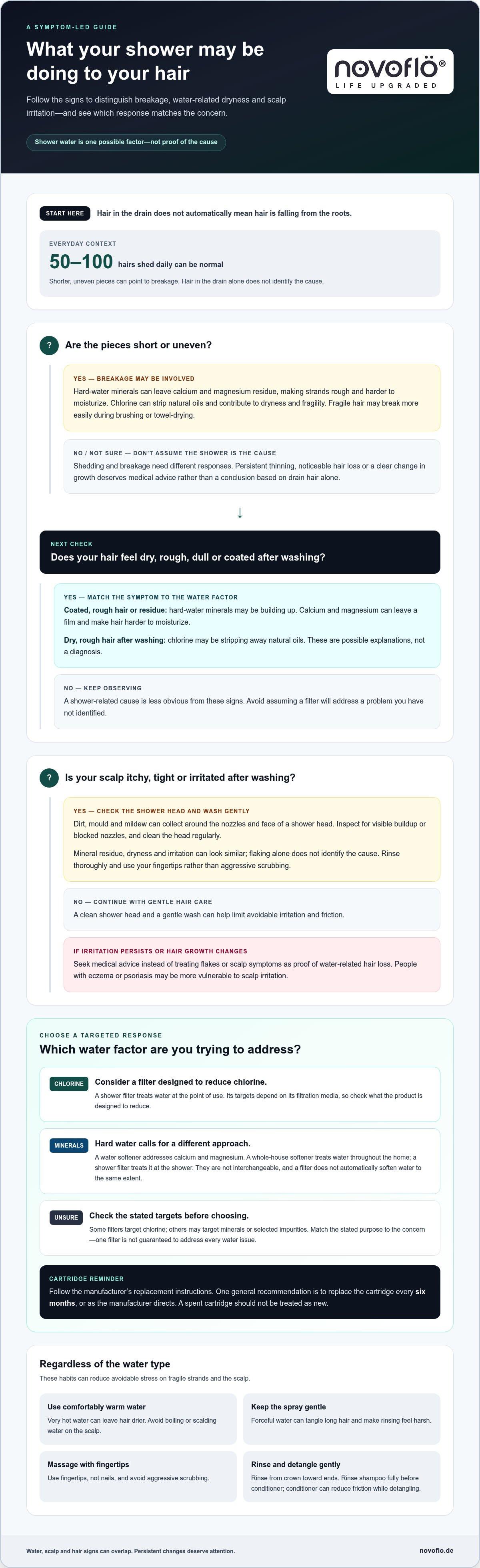
Hair in the drain doesn’t automatically mean your shower is making hair fall from the roots. Shower water causing hair loss can be a concern when hard-water minerals leave buildup that makes strands rough and brittle, or when chlorine strips away natural oils. That damage can lead to breakage, while some daily shedding is normal: around 50 to 100 hairs a day.
If your hair feels dull, dry or harder to manage after washing, shower water may be part of the problem. The type of water matters, as do buildup in the shower head and how your scalp responds.
Here’s how hard water, chlorine, possible contaminants and an unclean shower head may affect your hair and scalp, plus practical steps to reduce exposure and limit avoidable damage. You’ll also learn where a shower filter may fit into your hair-care routine in Egypt, and why persistent or noticeable hair loss deserves attention beyond your shower habits.
Key Takeaways
- Hair in the drain can reflect strand breakage, not only shedding from the roots. Notice whether your hair feels dry, rough, or dull after washing.
- Clean the shower head regularly to remove dirt, mould, and mildew that may contribute to scalp irritation.
- Hard-water minerals can build up on hair, while chlorine can strip away natural oils. Identify which water factor best matches the changes you notice.
- A shower filter can reduce chlorine and targeted impurities at the point of use. Novoflö’s shower filter is designed for domestic water conditions in Egypt.
1. Can Arsenic, Lead, and Fluoride in Shower Water Harm Hair?
Hair in the drain doesn’t always mean hair is falling from the roots. Normal shedding is around 50 to 100 strands daily, while breakage leaves shorter, uneven pieces. Arsenic in shower water can dry hair and irritate the scalp. Lead can weaken strands and dull their appearance. Fluoride may leave hair stiff and brittle. These effects can make hair look thinner without proving that water has changed its growth cycle.
Hard water contains calcium and magnesium. These minerals can leave a film on hair, making strands feel rough and harder to moisturize. Dry, coated strands are more vulnerable to breakage when brushing or towel-drying. Chlorine can also strip natural oils and weaken hair’s protein bonds, contributing to dryness and fragility. A water softener addresses calcium and magnesium, while other treatments target different impurities. These solutions are not interchangeable.
Water pressure matters during washing, too. A forceful spray can tangle long hair and make rinsing feel harsh, increasing pulling when you work shampoo through knots. Choose a gentle, even shower flow, and use your fingertips rather than your nails to massage your scalp. Rinse from the crown toward the ends. Less tugging means less avoidable stress on fragile strands.
Very hot water can leave hair feeling drier and harder to manage. Use comfortably warm water instead, especially if your hair already feels rough after a shower. Conditioner can reduce friction while detangling, but rinse shampoo fully first. If you notice persistent thinning, scalp irritation or a clear change in growth, don’t assume the shower is the only cause. Hair shedding has multiple possible causes, and breakage and shedding from the roots require different responses.
2. Dirty, mouldy shower heads and scalp irritation
Dirt, mould and mildew can collect around shower-head nozzles. During washing, water passes over those surfaces before reaching your scalp and hair. Clean the shower head regularly to remove visible buildup, including from the nozzle openings and the surrounding face, where grime can gather. If the spray pattern changes or several nozzles appear blocked, inspect and clean the head.
Hard water can affect your scalp as well as your hair. Calcium and magnesium may leave mineral residue, and buildup can contribute to itchiness or thinning. This may be more concerning for people with eczema or psoriasis, whose scalps are already vulnerable to irritation. Notice when symptoms appear: a tight, itchy feeling after washing or flakes that become more obvious after repeated showers can help you identify a pattern.
Flaking alone doesn’t identify the cause. Mineral residue, dryness and scalp irritation can look similar, so avoid aggressive scrubbing that adds friction. Instead, rinse thoroughly and wash gently with your fingertips. Check for visible mould or dirt on the shower head, and clean it regularly. If irritation persists or hair growth changes, seek medical advice rather than treating flakes as proof of water-related hair loss.
Temperature matters because extreme heat can injure skin. Scalding your scalp with boiling shower water could cause scarring and hair loss. Keep the water comfortably warm, not boiling, and turn it down if your scalp feels painful or unusually hot. A burn is different from routine dryness: stop exposing the skin to heat and get medical care for a serious injury. Protecting your scalp means considering both the water and the shower head it flows through.
3. Shower filters and chlorine reduction
Chlorine can strip natural oils, leaving hair dry, rough and brittle. A shower filter treats water at the point of use, before it reaches your hair. What a filter can reduce depends on its filtration media. Some shower filters target chlorine; others may target minerals or selected impurities. Match the filter’s stated purpose to the issue you want to address. A filter designed to reduce chlorine is not automatically a water softener.
Replacement matters. A filter cartridge has a limited working life, so follow the manufacturer’s schedule rather than waiting for a change in smell or hair texture. One general recommendation is replacement every six months, or as the manufacturer directs. When changing it, follow the product instructions and check that the new cartridge fits. A spent cartridge can’t be treated as though it were new.
Shower filters and water softeners address different water problems. A whole-house water softener removes calcium and magnesium throughout the home. A shower filter treats water at the shower, at its point of use. Some filters are designed to reduce minerals and chlorine, but performance depends on their design and media. Don’t assume a shower filter softens water to the same extent as a whole-house system.
If you’re investigating whether shower water is causing hair loss, first identify the water factor you want to address. Dryness after washing may lead you to consider chlorine reduction, while mineral residue points to hard-water buildup. Check the filter’s stated targets and replacement instructions. Notice whether your hair feels less rough or holds moisture better over time. A targeted response is more useful than expecting a filter to repair strands already damaged by heat, friction or chemical treatments.
4. Hard water and mineral buildup on hair
Hard water can leave calcium and magnesium residue along the hair shaft. That film can dull shine, reduce volume and make strands feel coated instead of clean. Moisture may struggle to reach hair beneath the buildup, so dryness and rough texture can persist even after conditioning. Hair may look thinner as a result, but a flat, coated appearance doesn’t mean it has stopped growing or become permanently less healthy.
Mineral residue can also irritate the scalp. A sensitive scalp may be more prone to irritation when residue builds up. Hard water can reduce shampoo lather, tempting you to use too much product. More shampoo isn’t necessarily the answer: rinse thoroughly and notice whether your scalp feels tight or flaky afterward. Hard water can also interact with hair dye, making colour fade faster.
A clarifying shampoo can help remove accumulated residue. Using one at least once a week for buildup from prolonged exposure to unfiltered water. Follow with conditioner, or try a low-pH leave-in conditioner to help close the hair cuticle and retain moisture. If you colour your hair, track how quickly the shade fades between appointments. This pattern may help you work out whether mineral buildup is affecting your routine.
An occasional bottled-water rinse, especially as the final rinse after shampooing, can reduce direct contact with minerals. Better water quality won’t repair hair that’s already damaged, but reducing further buildup can help protect its condition. A water softener removes calcium and magnesium throughout the home; a shower filter treats water at the shower and isn’t automatically a softener. For a separate concern, such as reducing chlorine and targeted impurities, explore shower filtration options. Choose the treatment for the water issue you’re addressing, not the promise of thicker hair.
Novoflö: Novoflö shower filter
The Novoflö shower filter is German-engineered for domestic water conditions in Egypt. It reduces chlorine and targeted impurities in shower water, making it a relevant option if you’re addressing water exposure as part of your hair and skin routine. It won’t address every possible cause of hair loss, and it isn’t a substitute for a water softener when the main concern is calcium and magnesium throughout the home.
Consider the Novoflö shower filter if you want to reduce chlorine and targeted impurities at the shower. Pair water-focused changes with gentle washing and scalp care, and seek medical advice for persistent or noticeable hair loss. Visit novoflo.de to learn more about the Novoflö shower filter.
Make your next hair-care change count
Let a clear pattern guide your next step, rather than reaching for another cosmetic fix. Notice whether your concern is scalp discomfort, brittle lengths or ongoing shedding, and respond to that specific change. Breakage and hair loss from the roots are not the same problem. If shedding persists or you see lasting thinning, speak with a doctor or dermatologist about other possible causes.
If you’re investigating whether shower water is causing hair loss, focus on the water factor you want to address. Novoflö offers a shower filter that reduces chlorine and targeted impurities in shower water. It can be one practical part of a broader routine, but it isn’t a promise to resolve every cause of hair loss.
Take the next step with a clear question about your shower water. Contact Novoflö about your water, then keep caring for your hair with informed, consistent choices. Small, targeted changes can help you move forward with confidence.
Frequently Asked Questions
What causes hair to fall out in the shower?
Hair in the drain can come from normal shedding or strands breaking during washing. Tangled hair pulled through a brush, rough towel-drying and tight hairstyles can add mechanical stress. To distinguish the two, look at shed strands: full-length hairs and shorter broken pieces suggest different issues. If shedding continues outside wash days or thinning becomes noticeable, consult a doctor or dermatologist.
Can Arsenic, Lead, and Fluoride in Shower Water Harm Hair?
Contaminants can affect hair or scalp condition, but what’s present in water varies. Arsenic is associated with dryness and scalp irritation; lead can weaken strands, while fluoride can leave hair stiff and brittle. These effects don’t establish the cause of any individual’s hair loss. If you suspect a water issue, note scalp symptoms and changes in texture, then discuss persistent concerns with a medical professional.
Is it normal to lose hair in the shower?
Yes, some hair in the shower is normal. Losing about 50 to 100 strands daily is within the typical range, and washing can gather loose hairs that were already ready to shed. A single wash can therefore look like heavy loss, especially after several days between shampoos. Watch for a sustained increase, visible thinning, or bald patches rather than judging by one drain cleanout.
Q7: How can I protect myself at home?
Start with habits you can control: clean the shower head regularly, use a gentle flow and avoid very hot showers. Detangle carefully instead of pulling through knots, and avoid tight hairstyles that strain the roots. If you want to reduce chlorine and targeted impurities at the shower, Novoflö offers a shower filter. Persistent scalp irritation or noticeable hair loss calls for medical assessment.
What Chemicals Are Present in Shower Water?
Chlorine may be present in tap water, which can also contain contaminants such as arsenic, lead or fluoride. The specific substances depend on the water source and conditions, so don’t assume every home has the same mix. For hair care, focus on symptoms and changes after washing rather than guessing which contaminant is present based on dryness alone.
What Is Hard Water?
Hard water has elevated levels of dissolved minerals, mainly calcium and magnesium. For example, mineral residue can leave washed hair feeling coated even after rinsing. Hard water can also reduce shampoo lather, which may tempt you to use more product. A shower filter and a water softener aren’t automatically the same solution, so identify whether chlorine or mineral hardness is your main concern.


