


Shower Filter vs. Bottled Water: Which Costs Less and Is Healthier
The healthier choice isn’t a straight contest: bottled water is for drinking, while a shower filter treats water that comes into contact with your skin and hair. In the shower filter versus bottled water comparison, the right option depends on the exposure you want to address, not simply on which water sounds purer.
It makes sense to look closely at what your household uses every day. Bottled water can come from different sources and receive different treatments; its safety also depends on production quality, packaging hygiene, and storage. A shower filter serves a different purpose: it reduces chlorine and targeted impurities in shower water.
This guide explains how bottled, tap, and filtered water compare in terms of health, cost, convenience, regulation, and microplastic exposure in Egypt. You’ll see where each option fits, what affects its ongoing cost, and why drinking water and shower water need separate solutions.
Key Takeaways
- Separate drinking-water needs from shower-water concerns: bottled water and a shower filter serve different purposes.
- Compare ongoing purchases with filter replacement to understand which option fits your household routine and budget.
- Look at how treatment, storage, and filtration affect water quality instead of assuming every source is equally protective.
- Consider Novoflö shower filter when your focus is reducing chlorine and targeted impurities in shower water for skin and hair.
Bottled Water Or Filtered Water: Which Is Healthier?
Bottled water and shower filtration serve different purposes: one is for drinking, the other treats water that contacts skin and hair. A shower filter can reduce chlorine and targeted impurities, but that does not establish that filtered shower water prevents or treats skin or hair conditions.
Bottled-Water Quality and Plastic Bottles
Bottled water can come from spring water, groundwater, or municipal supplies, and may receive different treatments before packaging. Its quality depends on production controls, packaging hygiene, storage, and shelf life, not the label alone. Heat and sunlight may encourage chemicals to leach from plastic packaging into water, affecting taste and safety. The water’s source and storage conditions matter.
Plastic Use and Convenience
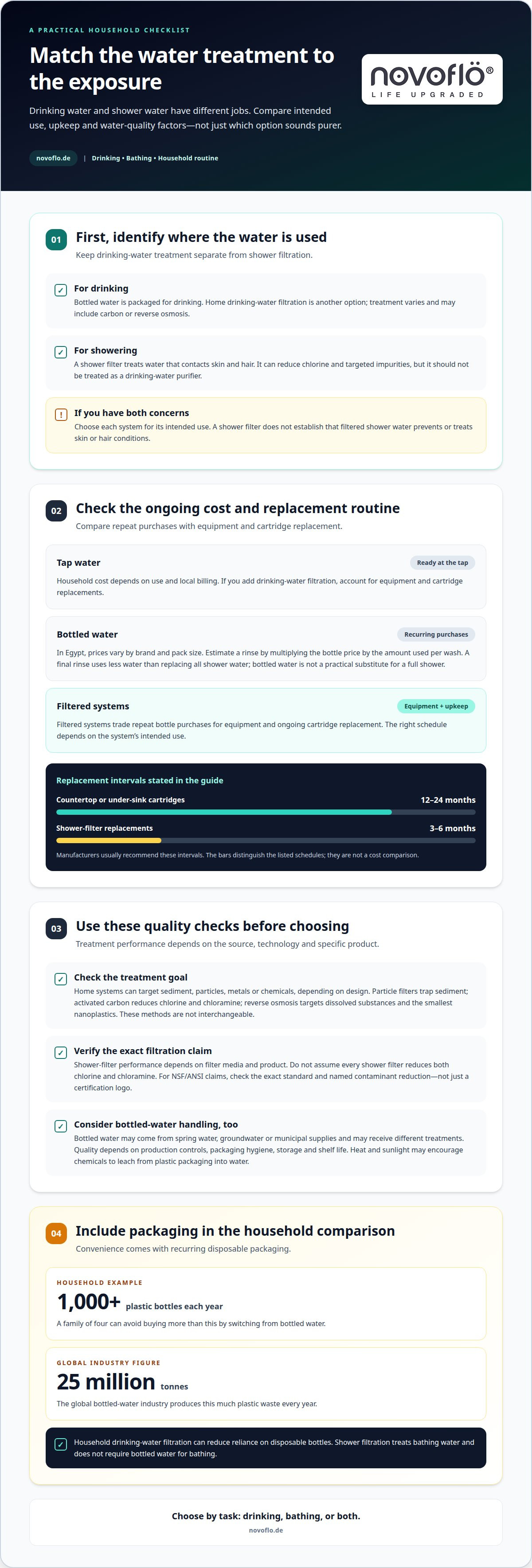
A sealed bottle is portable and ready to drink, but convenience creates recurring packaging waste. A family of four can avoid buying more than 1,000 plastic bottles each year by switching from bottled water. That changes the daily routine: household water filtration can reduce reliance on disposable bottles, while reverse osmosis is one treatment method for drinking water. A shower filter serves another purpose.
The environmental difference is substantial: the global bottled-water industry produces 25 million tonnes of plastic waste every year. Bottles used for drinking and shower water are not interchangeable. Choose according to the exposure and task: drinking-water treatment should match drinking needs, while shower filtration targets impurities in water used on skin and hair.
| Option | Main use | Key difference | Plastic impact |
|---|---|---|---|
| Bottled water | Drinking | Packaged, treated water; storage affects quality | Uses disposable plastic packaging |
| Shower filtration | Showering | Can reduce chlorine and targeted impurities | Does not require bottled water for bathing |
| Home water filtration | Drinking water | Treatment varies, including carbon or reverse osmosis | Can reduce reliance on disposable bottles |
Choose according to the water’s use: drinking, bathing, or both.
Costs and convenience of tap, bottled, and filtered water
The shower filter versus bottled water comparison depends on whether you need drinking water or shower water. Compare recurring purchases, equipment, and replacement needs rather than judging by convenience alone.
Tap Water Costs and Convenience
Tap water is ready for everyday kitchen and household use, without the need to carry or store bottles. Its household cost depends on use and local billing, while its convenience comes from having water available at the tap. If you want treated drinking water, filtration adds equipment and cartridge replacements. Choose a system for its treatment goal, such as reducing chlorine or targeting heavy metals, rather than assuming one system addresses every concern.
Bottled Water Costs and Showering
Bottled drinking water can be poured over the body for a rinse, but it is not a practical substitute for a full shower. The total cost depends on the bottled-water price and volume used; shower demand depends on flow and duration. In Egypt, prices vary by brand and pack size, so estimate your own cost by multiplying the bottle price by the amount used per wash.
Calculate the cost of a final rinse separately from replacing all your shower water. The shower filter versus bottled water choice depends on this distinction: occasional rinsing uses less water than a full wash, while repeated purchases add up over time.
Filtered Water System Costs
Filtered systems trade repeat bottle purchases for equipment and ongoing cartridge replacement. Countertop or under-sink systems have cartridge intervals of 12 to 24 months; shower-filter manufacturers usually recommend replacement every 3 to 6 months. Compare the system’s intended use and replacement schedule. A kitchen unit treats drinking water, while a shower unit treats bathing water.
For shower filtration, the cost depends on the selected filter and replacement routine. Explore shower filtration options as a distinct household choice.
Tap water treatment, regulation, and potential contaminants
Tap-water treatment and filtration depend on the source water and technology used. In Egypt, separate drinking-water treatment from shower filtration: each addresses a different exposure.
Home Filtration and Contaminant Reduction
Home filtration can target sediment, particles, metals, and chemicals, depending on the system’s design. Particle filters trap sediment; activated carbon reduces chlorine and chloramine; reverse osmosis targets dissolved substances and the smallest nanoplastics. These methods are not interchangeable. A drinking-water system may use technologies that a shower filter does not, so compare the manufacturer’s stated contaminant reductions with the water’s intended use.
Shower filters can reduce chlorine, but performance depends on the filter media and the specific product. Bottled drinking water is not a like-for-like comparison: it is packaged for drinking, while a shower filter treats water at the point of bathing. Bottled-water safety also depends on quality control, packaging hygiene, storage, and shelf life. In Egypt, these factors are relevant to household choices, but they do not establish a specific shower-water regulation.
Shower Filter Limits and Certifications
A shower filter should not be treated as a drinking-water purifier. Some filtration technologies target heavy metals or particles, but removal depends on the system. Activated carbon can reduce chlorine and chloramine; that does not prove every shower filter removes both. For NSF/ANSI claims, look for the exact standard and named contaminant reduction covered, rather than relying on a certification logo alone.
Manufacturers usually recommend replacing shower-filter cartridges every 3 to 6 months. Water use, incoming water quality, and the filter’s design affect how quickly a cartridge is used. Follow the product’s replacement instructions; an overdue cartridge can undermine the intended filtration.
In Egypt, concerns depend on source water, treatment, and storage conditions. No specific Egyptian showering regulation is established here, so don’t apply US standards as if they governed Egypt. Compare relevant drinking-water information with the shower filter’s stated reduction claims.
Bottled water microplastic exposure
Convenience doesn’t mean a plastic bottle contains particle-free water. A 2024 study by Columbia University researchers found roughly 240,000 nanoplastic particles in one liter of bottled water. Nanoplastics are smaller than microplastics, so that finding highlights why the source and treatment method matter when comparing drinking-water choices.
The figure describes particles detected in a tested liter, not a personal health outcome. It also doesn’t mean every bottle contains the same amount. Water source, packaging, and handling can differ, so one measurement cannot describe every brand or batch. Keep the distinction clear: exposure evidence identifies particles, while health effects require separate evidence.
For a practical comparison, bottled water offers portable drinking convenience, but each purchase uses plastic packaging. Tap water avoids that packaging, while its mineral content and treatment vary by source. Home filtration can address particular concerns, but different technologies do different jobs. Reverse osmosis targets the smallest nanoplastics; activated carbon is used to reduce chlorine and certain chemicals, not to demonstrate nanoplastic removal.
A shower filter is a separate tool. It treats water used for bathing, and its stated purpose may include reducing chlorine and targeted impurities. Don’t assume it removes microplastics or makes shower water suitable for drinking. The distinction matters: drinking-water systems and shower units have different uses, and filtration performance depends on the specific technology.
To reduce dependence on bottled water, use a drinking-water treatment approach designed for that purpose and maintain it according to the manufacturer’s instructions. This can also reduce packaging-related environmental impact. For bathing, choose filtration based on shower-water concerns rather than pouring bottled water straight from the container. Keep the goal specific: reduce disposable plastic for drinking, and treat shower water for its own targeted impurities.
Novoflö: Novoflö shower filter
The Novoflö shower filter is designed for domestic water conditions in Egypt and reduces chlorine and targeted impurities to support healthier skin and hair. It addresses shower-water needs, not drinking-water treatment: bottled water and kitchen filtration serve different purposes.
Choose a shower filter when your concern is the water that contacts your skin and hair during everyday showers. The practical distinction is simple: use a shower filter for shower water, and choose a separate drinking-water approach for water you consume. A shower filter is not a whole-house treatment system or a water softener.
For a focused change to your shower routine, explore Novoflö’s shower filter.
Choose the Right Water Solution for Your Routine
Make your next decision by separating the water you drink from the water you shower in. A thoughtful decision about the shower filter versus bottled water starts with the purpose: each option addresses a different part of daily life. Set specific priorities, then choose the treatment approach that matches them. This helps you avoid paying for a solution that doesn’t address your actual concern.
For your household, this can mean treating drinking water and shower water as separate choices, rather than expecting one product to do both. If your focus is shower water, consider whether reducing chlorine and targeted impurities fits your personal-care priorities. Base your decision on the product’s stated purpose and use it accordingly.
If shower-water treatment is your next step, contact Novoflö to discuss your options. Take the next step with a clear goal and a solution designed for that routine.
Frequently Asked Questions
Buying advice: What suits your situation?
Choose based on where you want to improve water quality. For drinking or cooking, select a treatment designed for drinking water; for shower exposure, consider a shower filter. If you’re comparing shower products, Novoflö fits a standard ½ inch connection and installs in under 60 seconds. Keep drinking-water and shower-water needs separate, then match the product to the intended use.
Does filtered water really make a noticeable difference?
A system can change a specific water characteristic, such as chlorine taste or odor, if it targets that characteristic and is maintained properly. What you notice depends on the source water and filtration method. For example, a household may notice a taste change after drinking-water treatment, while shower filtration addresses a different use. A change in taste or feel alone doesn’t prove that every contaminant was removed.
Is filtered water the clear winner?
No single option is right for every purpose. Bottled water is packaged for drinking, while a shower filter treats water used during bathing. A drinking-water filtration system is another distinct option, with performance depending on its design. Make the comparison practical: identify whether your priority is drinking, cooking, or showering, then choose a system made for that task rather than expecting one filter to cover every use.
What should you be drinking?
Choose drinking water from a source and treatment approach intended for consumption, not from a shower filter. If you prefer filtered drinking water, use a system designed for drinking-water treatment and follow its maintenance instructions. Bottled water is also sold for drinking, but storage and handling affect quality. Keep shower-water decisions separate; a shower filter is not a substitute for a drinking-water purifier.
Which is more reliable for safety?
Reliability depends on quality control, proper storage, and whether a filtration system is designed for the intended use. For packaged water, consider how it was handled; for a filter, follow the manufacturer’s maintenance and replacement instructions. Novoflö lists NSF, CE, RoHS, SGS, and ISO 9001 certifications. A certification or label should be considered alongside the product’s specific purpose and claims.
Does a shower filter work?
A shower filter can reduce contaminants its media is designed to target, but performance differs by product and contaminant. Novoflö states that its shower filter reduces chlorine and targets impurities including heavy metals, VOCs, rust, and sediment. Its cartridges are consumables: replacement guidance is 3 months for families and 4-6 months for individuals. Use it for shower water, not drinking water.


