


Chlorine Shower Filters: How They Work and What They Cost
A shower filter is only as useful as the contaminants its media can reduce. A chlorine shower filter treats water at the showerhead, but performance depends on its design and the specific reduction claim, not simply the word “filtered” on the package.
If you’re considering a chlorine shower filter for your home, start with the practical questions: what does it reduce, how often does its cartridge need replacing, and what will upkeep cost? Filters can target chlorine and other specified impurities, but they are not a solution for every water concern.
This guide explains how shower filters work, what to look for in chlorine-reduction claims, and how heat and filtration media affect performance. You’ll also learn how to assess cartridge life and ongoing replacement costs, so you can weigh the full commitment, not just the initial purchase.
Key Takeaways
- Compare coconut shell carbon and copper-zinc media by the contaminants they target and how they perform in shower conditions.
- Understand why hot showers can affect exposure to chlorine byproducts, and what that means for your household routine.
- Plan for cartridge replacement by considering usage, filter lifespan, and the ongoing cost of keeping a system in service.
- See how filtration may support your hair, skin, and indoor air goals, and when the Novoflö shower filter could fit your routine.
How do Shower Filters Work?
A shower filter passes water through treatment media before it reaches the showerhead. Its performance depends on the media, the water conditions, and the contaminants it is designed to target.
Carbon and KDF Filtration Media
Coconut shell carbon is a source of activated carbon, whose porous surface adsorbs certain substances as water passes through. Carbon filters can perform poorly in hot, high-pressure bathing conditions, so the media and its intended use matter. KDF uses copper-zinc media for chlorine treatment. KDF-55 is certified by NSF to remove chlorine. Look for the specific media named, rather than relying on a broad filtration claim.
Carbon and Vitamin C Filters
Carbon and vitamin C are distinct approaches used in some shower filters to target chlorine. Activated carbon relies on contact with its porous surface, while vitamin C media are designed to treat chlorine as water flows through. A filter’s label should identify its treatment media and the contaminant it targets. For example, a carbon unit designed for cooler, slower water may not perform as intended in a hot shower.
Contaminant Removal and Filter Limitations
Chloramines are generally harder to remove than free chlorine, and significant evidence does not show that shower filters remove them. Don’t assume a filter that targets chlorine also treats chloramines or every other contaminant. A shower filter treats water at one fixture; a whole-house filter treats water entering multiple household outlets. Shower filters therefore cannot provide the same point-of-entry coverage.
A typical inline filter installs between the shower arm and showerhead: unscrew the head, connect the filter, then reattach the head. Follow the product instructions, including any directions to flush the filter before showering. This setup treats water at that shower only. Choose media based on the product’s stated contaminant targets, and distinguish chlorine from chloramines.
Chlorine byproducts and shower exposure
Water treatment commonly uses chlorine to disinfect water, and trace amounts may remain in drinking and bathing supplies. Shower water can therefore contain residual chlorine after treatment. The amount varies with the water supply and treatment conditions, so there is no single chlorine level for every tap in Egypt.
In Egypt, the chlorine concentration in tap water depends on the supply reaching a particular home and its treatment conditions. There is no single amount that applies nationwide. A shower head also cannot reveal the concentration by smell or appearance, so those clues don’t provide a dependable measure.
Chlorine can react with other substances in water and form byproducts, including trihalomethanes. One study found that people absorbed more trihalomethanes during a 10-minute hot shower than from drinking a liter of water. That comparison concerns exposure, not proof that every shower creates the same dose.
Hot water changes how exposure happens. Some chlorine can pass through the skin during bathing, but only small amounts do, and the body expels them quickly. Much of the chlorine entering the body during a hot shower is inhaled after vaporising into chlorine gas. Ventilation and shower conditions affect the air around the spray.
A chlorine shower filter treats water at the shower before it reaches the showerhead. It does not automatically address every byproduct, and a chlorine-reduction claim does not establish that a filter removes trihalomethanes. Check the product’s stated targets: chlorine reduction and byproduct treatment are separate claims.
For a practical next step, consider a shower filtration approach focused on reducing chlorine at the point of use. Keep the distinction clear: filtration can target residual chlorine, while household ventilation helps manage humid shower air. Neither step establishes the exact chlorine level in Egypt’s tap water.
Filter cartridge lifespan and replacement costs
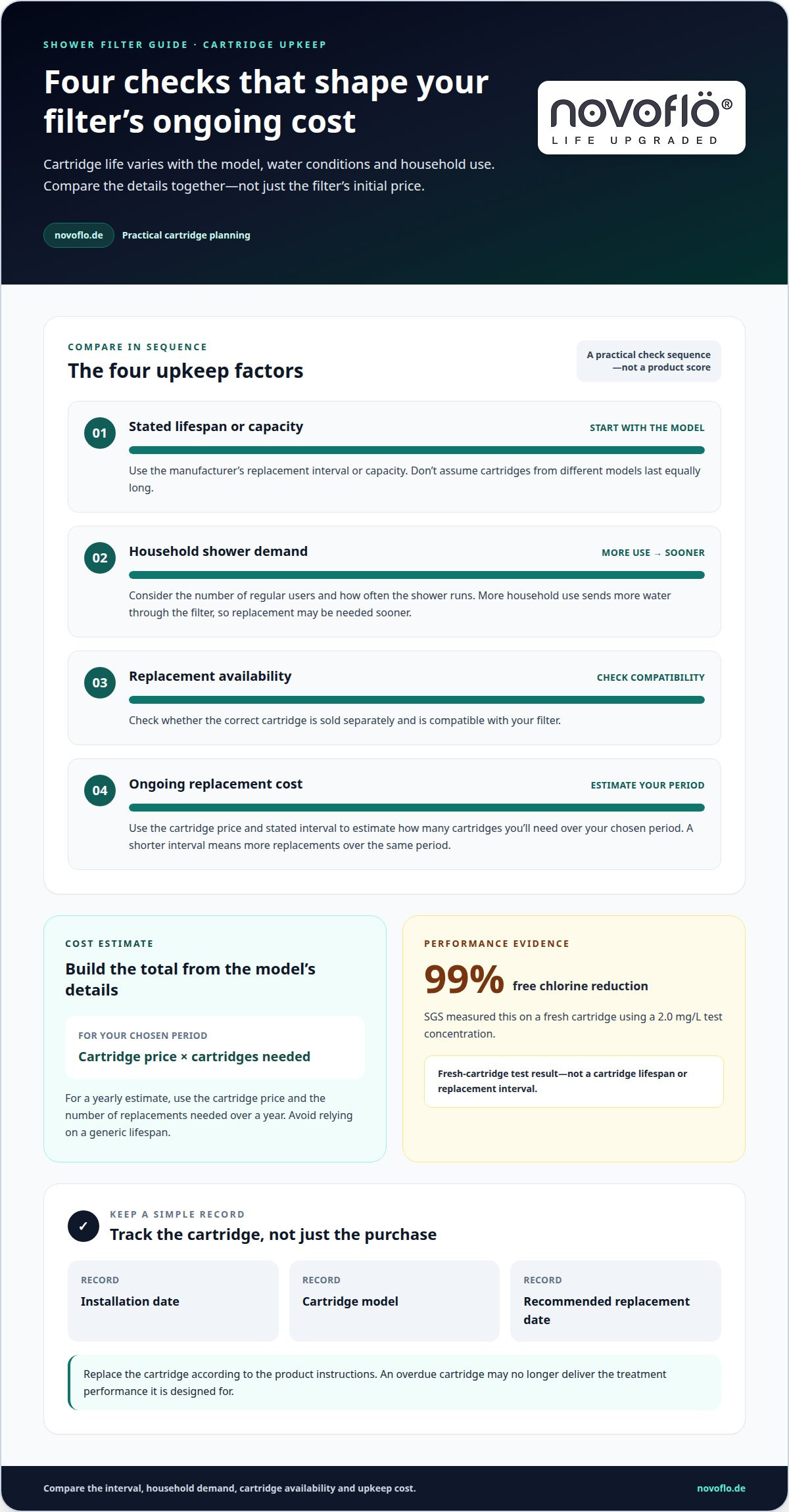
Cartridge life depends on the filter media, water conditions, and how often the shower runs. More household use sends more water through the filter, so the cartridge may need replacing sooner. Follow the replacement interval for that specific model rather than assuming all cartridges last equally long.
Start with the manufacturer’s stated cartridge lifespan or capacity. Then consider how many people use the shower and how often it runs. A household with several daily showers puts a different demand on a cartridge than occasional use. Water quality also matters because the filter’s targets affect how its media is used.
Compare replacement costs as part of the total upkeep, not just the initial purchase. Use the cartridge price and stated replacement interval to estimate how many cartridges you’ll need over a year. A shorter interval means more replacements over the same period. Check that replacement cartridges are compatible with your filter.
Keep a simple record of the installation date, cartridge model, and recommended replacement date. Replace the cartridge according to the product instructions when it is due. Don’t extend its use just to postpone a purchase: an overdue cartridge may no longer deliver the treatment performance it is designed for.
For a useful comparison, assess these details together:
- Stated lifespan: the maker’s replacement interval or capacity.
- Household demand: shower frequency and the number of regular users.
- Replacement availability: whether the correct cartridge is sold separately.
- Ongoing cost: cartridge price multiplied by the replacements needed over your chosen period.
This approach helps you estimate the long-term cost of a chlorine shower filter without relying on a generic lifespan that may not suit your shower use.
A performance result can offer another comparison point: SGS measured over 99% free chlorine reduction on a fresh cartridge using a 2.0 mg/L test concentration. This result describes fresh-cartridge performance, not a replacement interval.
Shower filter benefits for hair, skin, and indoor air
A shower filter can reduce specified substances in water before it reaches your skin and hair. It can be a practical point-of-use option when residual chlorine is the concern. It does not treat every water issue, and its benefits depend on the substances its media is designed to target.
For hair and skin, focus on the filter’s treatment claims rather than broad beauty promises. Reducing chlorine changes the water reaching your body, but it cannot guarantee softer hair, fewer skin concerns, or a specific cosmetic result. If dryness or irritation continues, water may not be the only factor. Hair products, skin conditions, and shower habits can also affect how you feel after bathing.
Indoor air is another consideration. Hot shower spray can release chlorine into the air, so reducing chlorine in shower water may reduce one source of exposure. A filter does not ventilate the bathroom or remove every airborne substance. Where practical, use an extractor fan or open a window, especially after a long, hot shower.
Choose based on the water conditions the filter is built to handle. Temperature and pressure matter because they affect how water moves through filtration media. A carbon design that performs poorly under hot, high-pressure bathing conditions may not suit every shower. Check the stated target and operating conditions, then replace the cartridge on schedule. Don’t assume a chlorine claim also covers chloramines, hardness, or unrelated contaminants.
The clear takeaway: treat filtration as one targeted step, not a substitute for every hair, skin, or air-quality measure. If you want to reduce chlorine at the shower point, explore a shower filter option suited to domestic water conditions in Egypt. Pair that step with sensible bathroom ventilation and a routine that works for your skin and hair.
Novoflö: Novoflö shower filter
The Novoflö shower filter is German-engineered for domestic water conditions in Egypt and reduces chlorine and targeted impurities. It offers point-of-use filtration for your daily shower, rather than treating water at every household tap.
Choose the Novoflö shower filter if reducing chlorine in your shower water is your priority. Its role is focused: it does not replace whole-house filtration or water softening, and reducing chlorine does not mean every contaminant is removed. Review its stated targets and follow the cartridge replacement guidance to maintain filtration over time.
If you’d like to explore whether the Novoflö shower filter suits your shower routine, contact Novoflö.
Make your next shower a more deliberate choice
Before choosing a chlorine shower filter, decide what you want your shower routine to address, then choose a system designed for that purpose. Keep the decision practical: a focused choice is easier to maintain than buying based on broad promises or expecting one change to solve every concern.
Make filtration part of your regular home-care routine. Keep the product information handy, follow its care instructions, and plan cartridge replacement alongside other household essentials. That makes upkeep a considered habit without complicating your shower routine.
If you’re ready to take that step, discuss shower filtration with Novoflö. Choose a more intentional starting point for your everyday water routine, and move forward with confidence.
Frequently Asked Questions
Do shower filters remove chlorine effectively?
Yes, a properly designed chlorine shower filter can reduce free chlorine when its media is suited to shower conditions. KDF-55 is NSF-certified to remove chlorine, while performance varies by filter design and use. Check whether a product identifies its treatment media and chlorine target. A chlorine-reduction claim doesn’t automatically cover chloramines, which are harder to remove.
What types of shower filters reduce chlorine?
Filtered showerheads and inline shower filters are the main formats. Both treat water at the shower, but their installation and media arrangements differ. Carbon and KDF-based filters are common chlorine-targeting options; KDF-55 is one named KDF medium. Compare the filter’s stated target and intended operating conditions, not just its format. The design should make clear which media it uses.
How often should shower filter cartridges be replaced?
Replace a cartridge according to its maker’s schedule and the household’s usage. For the Novoflö shower filter, the stated interval is 3 months for families and 4-6 months for individuals. Keep the installation date somewhere visible, such as a bathroom note or household calendar. If several people shower daily, use the family interval rather than assuming an individual-use schedule applies.
Are shower filters safe for sensitive skin or hair?
A shower filter may help reduce targeted substances in shower water, but suitability for babies or sensitive skin can vary; check the product information and stop using it if discomfort occurs. It addresses targeted substances in shower water but cannot diagnose or treat a skin condition. If a new product or routine causes discomfort, stop using it and seek appropriate medical advice, especially if symptoms persist.


