


What a Shower Filter Can Remove from Water
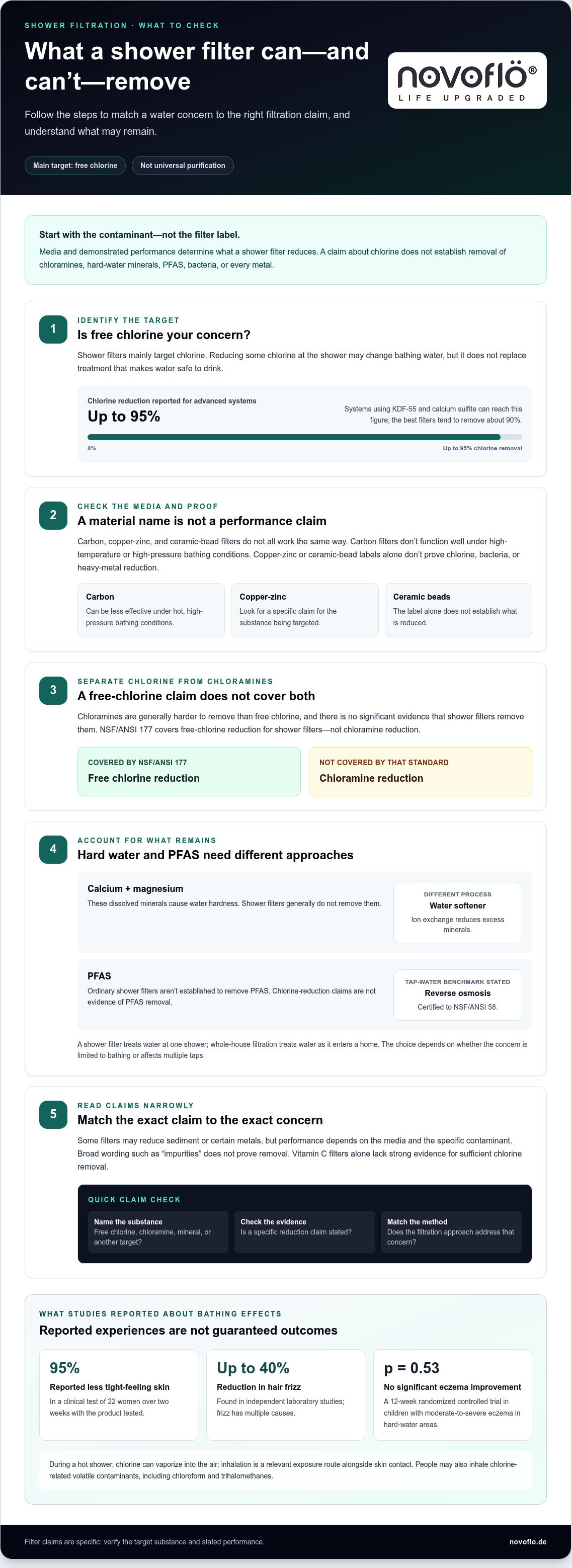
A shower filter can cut chlorine, but it can’t remove every contaminant. Some advanced systems using KDF-55 and calcium sulfite can remove up to 95% of chlorine. The main answer to what shower filters remove is free chlorine; some filters may also reduce sediment or certain metals, but they generally don’t remove the calcium and magnesium behind hard water.
If your skin feels tight or your hair feels rough after showering, water quality may be one factor. A shower filter can reduce chlorine, but what it removes depends on the filter media and its demonstrated performance. This guide explains what shower filters can remove, how filtered water may affect skin, hair and airways, and what remains, including hard-water minerals and chloramines. You’ll get a clearer picture of what a shower filter can realistically do and where its limits matter.
Key Takeaways
- Learn why filter media matters when reducing chlorine, and why carbon, copper-zinc, and ceramic beads don’t all work the same way.
- Understand how reducing chlorine exposure during a shower may relate to skin, hair, and breathing comfort.
- Separate contaminants a shower filter may reduce from hard-water minerals, chloramines, and other substances it generally won’t remove.
- Recognize why heavy-metal reduction claims need careful scrutiny and what to consider if contamination is a concern.
What does a shower filters remove from water?
Shower filters mainly target chlorine, but their media and performance vary. Understanding what shower filters remove also means knowing what remains in the water.
Carbon, Copper-Zinc, and Ceramic-Bead Media
These are filtration materials used in shower filters, but their names alone don’t establish what a filter removes. Advanced systems using KDF-55 and calcium sulfite can remove up to 95% of chlorine; the best filters tend to remove about 90%. Carbon filters don’t function well under high-temperature or high-pressure bathing conditions. Copper-zinc and ceramic-bead labels also need specific performance claims, not assumptions about chlorine, bacteria, or heavy metals.
Chlorine disinfects municipal water, helping control germs such as salmonella and norovirus. Reducing some chlorine at the shower may change bathing water, but a shower-head filter does not replace treatment that makes water safe to drink.
PFAS and Shower Filtration
PFAS are contaminants that ordinary shower filters aren’t established to remove. For tap water, the provided benchmark is reverse osmosis filtration certified to NSF/ANSI 58. That standard identifies a different filtration approach from a shower filter, so don’t treat chlorine-reduction claims as evidence of PFAS removal.
Vitamin C filters alone lack strong evidence for sufficient chlorine removal. Chloramines are generally harder to remove than free chlorine, and NSF/ANSI 177 covers free-chlorine reduction, not chloramine reduction. These distinctions matter when matching filtration to a chemical concern.
Whole-Home Filtration Alternatives
A shower filter treats water at one shower, while whole-house filtration treats water as it enters a home. The right approach depends on whether the concern is limited to bathing or affects multiple taps. Water softening is different: ion exchange reduces excess calcium and magnesium, the minerals associated with hard water. A shower filter generally does not remove these dissolved minerals.
For PFAS concerns, the stated benchmark is reverse osmosis certified to NSF/ANSI 58, not a standard shower filter. Match the filtration system to the contaminant, rather than assuming one shower head filter addresses every chemical, mineral, or heavy-metal concern.
Potential effects on skin, hair and airways
Removing chlorine from shower water may change how skin and hair feel after bathing. Some people notice less dryness or tightness, but filtered tap water doesn’t guarantee those effects. A clinical test involving 22 women over two weeks found that 95% reported less tight-feeling skin after showering with the product tested. That result describes participants’ reports, not a guaranteed outcome for every household.
Hair texture may also respond to water conditions. Independent laboratory studies found shower filters can reduce hair frizz by up to 40%. Frizz can have several causes, so the figure shouldn’t be treated as a promise for every hair type. A filter’s effect depends on its media and the contaminant it targets, not simply its shower-head design.
Hard water raises a separate question. Calcium and magnesium create water hardness, and a shower filter generally doesn’t remove these dissolved minerals. A water softener uses ion exchange to reduce excess calcium and magnesium. However, softening shouldn’t be presented as an eczema treatment: a 12-week randomized controlled trial found no significant improvement in children with moderate-to-severe eczema living in hard-water areas, with p=0.53.
Airways matter, too. During a hot shower, chlorine can vaporize into the air, and much of the chlorine entering the body during showering comes from inhaling that vapor. People may also inhale chlorine-related volatile contaminants, including chloroform and trihalomethanes. Inhalation is therefore a relevant exposure route alongside skin contact.
Keep the distinction clear: a shower filter reduces targeted substances in bathing water, but does not replace drinking-water treatment or a softener for hard water. If your goal is improving your skin and hair routine, consider whether chlorine reduction is what you want. For eczema or persistent irritation, don’t assume chlorine or hard water is the sole cause. Symptoms can have different triggers, and filtration only addresses substances its media can reduce.
Contaminants shower filters do not remove
A shower-head filter has a specific job, not a universal purification role. Many shower filters are designed to reduce chlorine, but that does not mean they remove every contaminant in tap water. A filter designed for free chlorine, for example, will not automatically address chloramines, dissolved minerals or PFAS. Its media and supported performance claims determine what it can reduce.
Chloramines deserve special attention because they’re generally harder to remove than free chlorine. There’s no significant evidence that shower filters remove chloramines. NSF/ANSI 177 covers free-chlorine reduction for shower filters, not chloramine reduction. So a claim about chlorine alone doesn’t establish performance against chloramines. Read the wording closely: the contaminant named in the claim matters.
Hard-water minerals are another clear limit. Dissolved calcium and magnesium cause water hardness, and shower filters generally aren’t designed to remove them. Replacing a cartridge won’t turn a chlorine filter into a water softener. Softening uses ion exchange to reduce excess calcium and magnesium, a different process from shower filtration. If mineral deposits build up on a faucet or shower screen, a chlorine-focused filter won’t address the cause.
Don’t treat broad claims about “impurities” as proof that a filter removes them. Some filters may reduce sediment or certain metals, but performance depends on the media and the specific contaminant. Bacteria, chemicals and minerals require different treatment claims; a general filtration label on a shower head doesn’t establish removal. Compare the water before and after filtration for the substance being tested, then match the result to the exact claim, such as free-chlorine reduction. Don’t assume every contaminant is covered. This distinction separates targeted shower filtration from whole-home treatment, which treats water entering the home rather than one shower.
Heavy-metal reduction claims and limitations
Some shower filters may reduce heavy metals or sediment, but that doesn’t make every shower filter a metal-treatment system. A filter isn’t necessarily designed or certified to address heavy-metal contamination generally. A claim about sediment or chlorine also doesn’t prove reduction of lead, copper or another specific metal. Look for evidence tied to the exact contaminant and the filter’s performance.
Third-party certification can help clarify a claim. The Water Quality Association (WQA) and IAPMO are organizations whose certifications consumers can look for when assessing performance. Read the certification’s scope: it should identify what the filter reduces. A general certification label doesn’t establish that a shower filter addresses every metal in your water.
Lead needs particular care. Lead in bathing water is relatively safe because the main hazard is ingestion, not skin contact. Still, young children and pregnant people should avoid swallowing bath water that may contain lead. A shower filter shouldn’t be treated as a fix for confirmed lead contamination or as a substitute for addressing its source.
When testing confirms heavy-metal contamination, the recommended treatment route is a whole-house or point-of-entry system certified to NSF/ANSI 53. That is a different purpose from a shower filter designed to reduce chlorine. Match the treatment to the test result: the metal identified, its level, and where it enters the home all matter. If iron leaves red or brown stains on a tub or faucet, that visible sign points to a water-quality concern, but it doesn’t identify every contaminant present.
Choose a shower filter for the job it’s built to do, not for broad claims about “clean water.” If chlorine reduction is your goal, explore shower filtration for chlorine. For confirmed heavy metals, treat the test result as the priority and use a system certified for that specific concern.
Novoflö: Novoflö shower filter
Novoflö’s shower filter is designed to reduce chlorine and targeted impurities in domestic water conditions in Egypt. It’s a practical option if your priority is improving shower water, particularly when chlorine reduction matters to your daily skin and hair routine. It doesn’t replace treatment for hard-water minerals, PFAS, chloramines or confirmed heavy-metal contamination. Matching the filter to its purpose keeps expectations clear: it provides targeted shower filtration, not whole-home purification or water softening.
Choose Novoflö for a more considered shower routine, with a clear understanding of what filtration can and cannot address. The right treatment for other concerns depends on the contaminant involved. Visit Novoflö online to learn more about its shower filter.
Make Your Next Shower Choice Deliberate
Knowing what shower filters remove helps you choose based on a real priority, not a broad promise. Decide what matters most in your household: a more considered daily shower routine, a specific water concern or both. Keep that goal in mind as you compare options. A focused choice is easier to assess and less likely to be shaped by claims that don’t match your needs.
Novoflö offers the Novoflö shower filter for people looking to make shower filtration part of everyday personal care. If you have questions about whether it fits your needs, contact Novoflö with your questions. Take the time to choose thoughtfully, then make your routine work better for you.
Frequently Asked Questions
Do Shower Filters Work and Are They Worth It?
Yes, shower filters can reduce the specific substances their media targets, so they’re worth considering if chlorine reduction is your priority. Their value depends on matching the filter’s stated purpose to your concern. A chlorine-focused filter, for example, isn’t the right choice for hard-water scale. Treat broad “clean water” language cautiously and look for clear, substance-specific performance claims.
Guide: When is a shower filter necessary?
A shower filter isn’t necessary for everyone. It may suit you if reducing chlorine in bathing water is a household priority. First identify the concern: chlorine, hard-water deposits and other contaminants require different approaches. A filter for shower water, for instance, won’t treat water at every tap or replace drinking-water treatment. Choose based on the specific problem you want to address.
What Else Do Shower Filters Miss?
Shower filters can miss chloramines, hard-water minerals, PFAS, and heavy-metal contamination. A filter’s purpose and certification scope matter more than a general “multi-stage” label. For example, NSF/ANSI 177 concerns free-chlorine reduction, not chloramine reduction. If a concern involves a specific contaminant, match the treatment method to that substance rather than assuming one shower filter handles every water-quality issue.
Will a shower filter help with eczema or dry skin?
A shower filter may reduce chlorine exposure, but it shouldn’t be presented as an eczema treatment. Dryness and irritation can have several causes, so changing a filter alone may not resolve them. If you’re evaluating a filter, notice whether your skin feels different after bathing and consider other routine factors, such as cleanser choice and shower habits. Persistent or severe symptoms deserve medical attention.
What contaminants can shower filters remove or reduce?
Depending on the media, shower filters can reduce free chlorine, and some may reduce sediment or certain heavy metals. Claims should identify the contaminant rather than promise general purification. A filter marketed for chlorine reduction, for example, doesn’t automatically address lead, PFAS, calcium or magnesium. Check the stated performance and certification scope against your specific water concern.
Do shower filters remove chlorine and chloramine effectively?
Some shower filters reduce free chlorine, but chloramine reduction is a separate claim and shouldn’t be assumed. NSF/ANSI 177 covers free-chlorine reduction for shower filters, not chloramine reduction. If your concern is chloramine, look for evidence that specifically addresses chloramine rather than relying on a chlorine claim. The distinction helps you judge whether a filter’s stated purpose matches your water-treatment need.


