


Shower Water and Skin Irritation: Causes and Relief
A water allergy is possible, but it’s rare: about 50 cases of aquagenic urticaria have been reported in medical literature. More often, shower water and skin irritation comes from hot water, chlorine, hard-water minerals, or cleansing products rather than an allergy to water itself. Water-triggered itching without visible hives can also have other causes.
That tightness, redness, or itching after a shower is real, and your usual soap may not be the only factor. Hot water can strip the skin’s natural oils, while chlorine and hard-water minerals may contribute to dryness and irritation.
Learn how to spot likely triggers, soothe irritated skin, and adjust your shower routine without guesswork. We’ll also explain when persistent itching needs medical attention, so you can distinguish a possible environmental irritant from a symptom that needs assessment.
Key Takeaways
- Notice whether water contact brings visible hives or itching alone; the difference can help point to what needs attention.
- Use shorter, comfortably warm showers and moisturise damp skin to support your skin’s protective barrier.
- Look beyond limescale: chlorine, cleansers, and shower temperature can all contribute to post-shower discomfort.
- Arrange medical advice when itching persists, worsens, disrupts sleep, or comes with concerning symptoms.
What are the effects of limescale on the skin?
Hard water contains calcium and magnesium, which can leave mineral residue on skin after bathing. Heating hard water can form tiny mineral crystals that settle on the skin and contribute to tightness or irritation. Limescale isn’t the only possible trigger: chlorine and other water-treatment chemicals may also dry or irritate sensitive skin. Notice whether symptoms follow particular showers or occur after other water exposure. That pattern can help distinguish a possible water-quality trigger from a reaction to soap or heat.
Water treatment can reduce mineral content, but it isn’t a guaranteed fix for skin symptoms. An ion-exchange water softener reduces calcium and magnesium in water. In a trial involving 336 children with moderate or severe eczema, adding a softener to usual care didn’t improve the main objectively assessed eczema outcome after 12 weeks. That finding matters: reducing limescale doesn’t necessarily resolve an existing skin condition. Shorter bathing with lukewarm water and moisturizing damp skin remain practical ways to reduce irritation.
Chlorine-related dryness calls for a different response than mineral residue. Keep showers comfortably warm, limit harsh cleansers, and apply an unscented moisturizer after rinsing. If redness or itching appears after exposure, note whether it follows a pool visit, shower, or new product. A clear pattern gives a clinician more useful context than assuming limescale is the cause.
Water-triggered hives or intense itching also need careful distinction. Aquagenic urticaria can cause hives after water contact, while aquagenic pruritus causes itching without visible hives or rash. Second-generation H1 antihistamines are often used for aquagenic urticaria because they cause less drowsiness. Antihistamines are also a common treatment for aquagenic pruritus. Clinicians may consider phototherapy or other prescription treatments based on the symptoms.
For mild, temporary irritation, aloe vera may offer short-term soothing, and moisturizing after bathing can help. Avoid scratching, which can further aggravate irritated skin. Persistent itching, recurring hives, or symptoms that disrupt daily life warrant clinical assessment. A clinician can distinguish a water-related reaction from eczema, contact irritation, or another cause and guide treatment.
What are the solutions to hard water and itchy skin?
Calcium and magnesium in hard water may irritate the skin barrier, while frequent hot showers and cleansing products can add to dryness. If shower water and skin irritation seem linked, use that pattern to identify where to start, then adjust your routine and the likely trigger.
Hard Water Minerals and the Skin Barrier
Hard-water minerals may disrupt the skin’s protective barrier, making it harder to retain moisture. After showering, skin can feel tight, dry, or itchy, especially where residue remains. Take shorter showers, rinse thoroughly, and moisturize while your skin is still damp. If your face is sensitive, keep it out of the shower stream and wash it separately with filtered water. These changes reduce direct exposure without assuming minerals explain every reaction.
Hard Water and Dry Skin
Hard water may contribute to dry skin by leaving mineral residue that adds to tightness and discomfort. Hot water and harsh soap can compound this by stripping natural oils. Try comfortably warm water, shorter showers, and a mild syndet cleansing bar instead of traditional soap. Use less cleanser, rinse fully, then apply an unscented moisturizer to damp skin. If chlorine in the water is also a suspected trigger, consider it separately from mineral hardness.
Dermatitis Flare-Ups and Hard Water
Hard water doesn’t cause dermatitis, but it may irritate existing dermatitis or contribute to a flare-up. That distinction matters: changing the water alone may not address the underlying skin condition. Keep showers brief, avoid vigorous rubbing, and consider applying a petroleum-based cream before water exposure to create a protective barrier. If a familiar rash worsens after bathing or doesn’t settle with gentler care, seek clinical advice rather than relying only on water changes.
Identifying the Cause of Irritation
To assess whether shower water and skin irritation are connected, notice whether tightness, dryness, redness, or itching follows bathing. If symptoms start after a new soap and ease when you stop using it, the cleanser may contribute; a rash that persists between showers may need assessment. Use lukewarm water, shorten showers, rinse away residue, and moisturize damp skin. If chlorine is a suspected trigger rather than hard-water minerals, the Novoflö shower filter reduces chlorine and targeted impurities, but it isn’t a water softener.
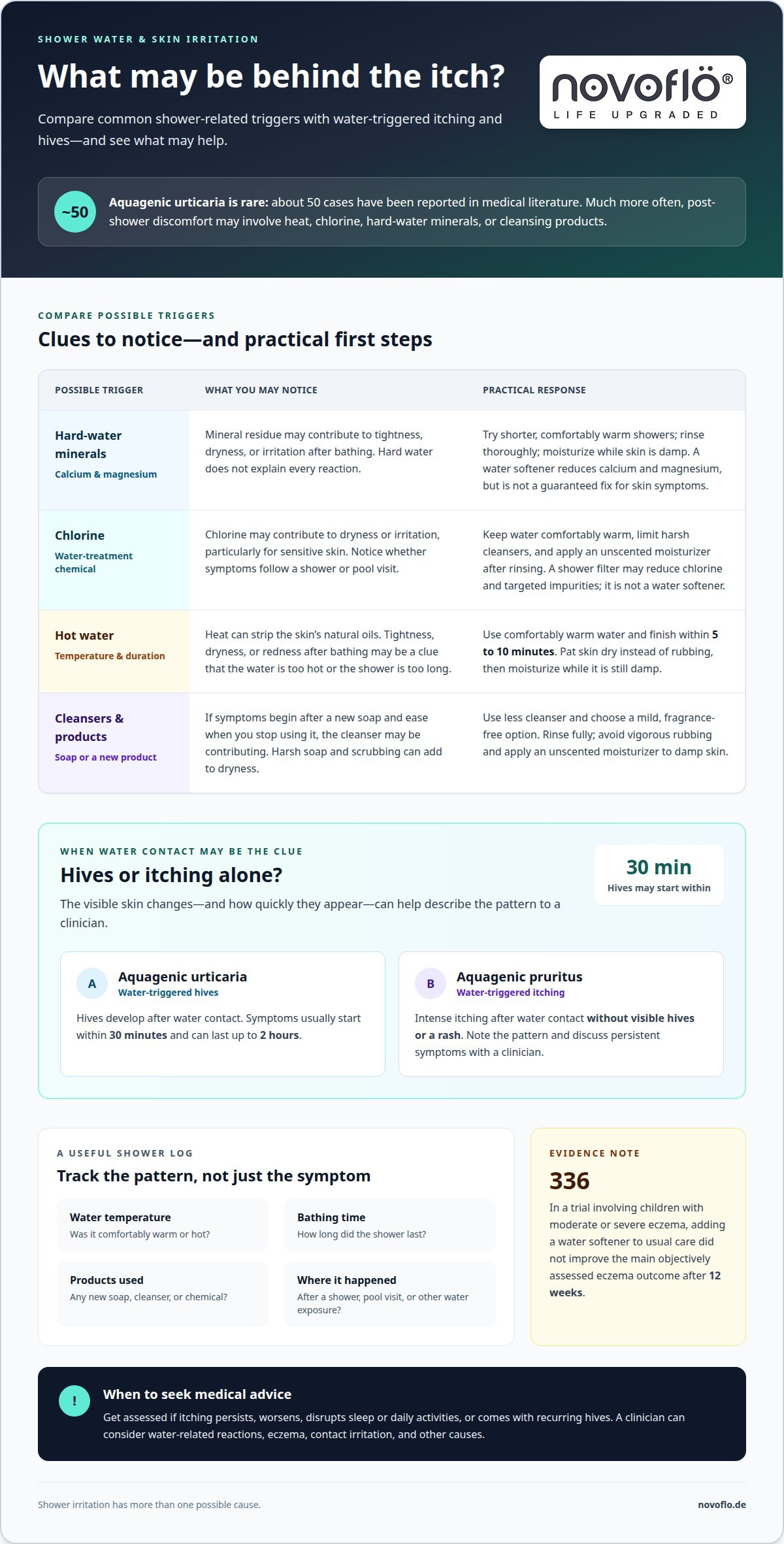
Advice about persistent post-shower itching
Start with the shower itself: use comfortably warm water and finish within 5 to 10 minutes. Hot water can strip protective oils, while redness after bathing can signal that the temperature is too high. Pat skin dry instead of rubbing, then apply an unscented moisturizer while it remains damp. These steps reduce common sources of dryness, but persistent symptoms still deserve attention.
Track the reaction after each shower. Note the water temperature, bathing time, cleanser, and any new chemicals or products. Hives that develop after water contact may suggest aquagenic urticaria; symptoms usually start within 30 minutes and can last up to 2 hours. Intense itching without visible hives or rash is called aquagenic pruritus. That distinction helps describe symptoms clearly during a clinical appointment.
Eczema can flare when heat, cleansers, or repeated washing irritate already sensitive skin. Switch to a mild, fragrance-free cleanser, use less soap, and avoid scrubbing affected areas. If itching continues despite these changes, worsens, disrupts sleep, or interferes with daily activities, seek medical assessment. A clinician can review the pattern and examine persistent dryness, rash, or skin changes rather than treating every case as a water reaction.
Seek urgent help if itching or hives occur with trouble breathing, throat or tongue swelling, faintness, or collapse. These symptoms can signal a severe allergic reaction. A painful rash that spreads quickly, fever, blistering, or sores affecting the mouth or eyes also need prompt medical attention. Don’t wait for a gentler shower routine to resolve these warning signs.
Recurring itching after water exposure can have causes beyond temperature, chlorine, or hard-water minerals. Aquagenic pruritus can occur alongside blood disorders, but shower-related itching alone doesn’t diagnose one. Note when symptoms begin, how long they last, whether a rash appears, and which products you used. This record gives a healthcare professional useful details to decide what assessment or treatment may be appropriate.
Chlorine-related skin dryness and irritation
Chlorine can contribute to dry, itchy skin after showering, but irritation doesn’t automatically mean you’re allergic. Stinging, tightness, or redness may reflect dryness rather than an allergic reaction. The pattern matters: note whether symptoms follow showers, swimming, a new cleanser, or another exposure. Hotter water and longer showers can also aggravate dryness, making chlorine just one possible trigger. A rash that eases after avoiding a suspected trigger provides useful context, but it doesn’t establish a diagnosis.
Try a practical reset: take a shorter, lukewarm shower, use a mild, fragrance-free cleanser, and apply an unscented moisturizer to damp skin. Avoid scrubbing itchy areas or introducing several new products at once, since that makes it harder to identify what worsens the reaction. Dry skin can become more vulnerable to infection, so protect irritated areas and watch for changes. A chlorine-related rash may calm down after a few days.
Persistent itching needs a closer look, especially if no visible rash appears. Aquagenic pruritus causes itching after water contact without hives or a rash; aquagenic urticaria produces hives. These conditions differ from simple dryness and need clinical assessment. Keep a short record of when the sensation starts, how long it lasts, whether marks appear, and which products touched your skin. Share those details with a dermatologist if symptoms recur or continue despite gentler bathing.
If chlorine seems connected to your discomfort, reducing exposure in the shower may be a useful part of a gentler routine. A shower filter designed to reduce chlorine and targeted impurities can address that specific water factor; it doesn’t treat every skin condition or replace medical care. Continue moisturizing and adjusting the water temperature while observing whether your symptoms change.
Explore shower filtration for chlorine reduction as one practical step when shower water appears to trigger dryness.
Novoflö: Novoflö shower filter
The Novoflö shower filter may be a practical step if chlorine or other targeted impurities are contributing to shower-related dryness. Its German-engineered filtration system is designed for domestic water conditions in Egypt and reduces chlorine and targeted impurities to support healthier skin and hair.
A shower filter addresses a specific water-quality concern, not every cause of itching. Hard-water minerals, hot showers, cleansers, eczema, and water-triggered conditions may need different approaches. Continue gentle bathing habits, and seek medical advice for persistent or severe symptoms. A shower filter can complement your routine when reducing chlorine exposure is relevant.
If you’re considering a filtration step for your shower, contact Novoflö to learn more about its shower filter.
Make your next shower routine more intentional
Make your next step a focused one. Instead of changing your cleanser, shower habits, and water setup all at once, adjust one factor at a time. That makes it easier to notice what affects your skin and avoids turning everyday care into guesswork. The pattern behind shower water and skin irritation can help you decide whether to change your routine, reduce chlorine exposure with a shower filter, or seek medical advice.
Keep persistent or worsening symptoms on your radar, especially when itching disrupts sleep or comes with visible skin changes. A gentler routine can support comfort, but ongoing symptoms deserve proper assessment. For the water-related part of your routine, explore the Novoflö shower filter and consider whether it fits your needs.
Small, deliberate changes give you a clearer path forward. Choose the next step that fits what your skin is telling you.
Frequently Asked Questions
Can someone be allergic to water?
Yes, but a true water-triggered allergy-like condition is exceptionally rare. Aquagenic urticaria can produce small hives after contact with water, including rain, sweat, or tears; temperature doesn’t determine the reaction. This differs from ordinary dryness after a hot shower. If wet skin repeatedly develops raised welts, take photos and record the water exposure to show a clinician.
What Is Aquagenic Pruritus?
Aquagenic pruritus is intense itching triggered by water touching the skin, typically without visible hives or rash. It can follow a shower, rain, sweat, or other water contact, so symptoms aren’t limited to bathroom routines. The sensation may start shortly after exposure and last from 10 minutes to two hours. A clinician assesses the symptom pattern and may investigate possible underlying causes.
What are the medical treatments for this condition?
Treatment depends on whether itching occurs with hives, a visible rash, or no skin changes. For aquagenic pruritus, antihistamines are commonly used; a clinician may also consider capsaicin cream, anti-itch creams, pregabalin, antidepressants, naltrexone, propranolol, clonidine, or phototherapy. These are medical options, not a self-treatment checklist. Discuss symptom timing, other medicines, and your health history before starting treatment.
Is a Hot Shower Bad for Your Skin?
Frequent hot showers can dry and inflame skin by removing oils that help retain moisture. Keep water comfortably warm and aim for a 5 to 10 minute shower; redness after bathing is a practical sign to lower the temperature. If you have eczema or dry patches, avoid directing hot spray onto affected areas and moisturize soon after towelling.
What exactly causes the skin to react this way?
Several triggers can contribute, so one explanation won’t fit every reaction. Heat and cleansing products can strip protective oils; hard-water calcium and magnesium may aggravate a sensitive barrier, while chlorine may add to dryness. Eczema can flare with irritation. Water-triggered conditions are another possibility: hives suggest urticaria, while intense itching without visible skin changes may fit aquagenic pruritus. Timing and appearance help distinguish them.
When should I see a healthcare provider?
Arrange a medical appointment if itching keeps returning, worsens despite gentler bathing, disrupts sleep, or affects daily activities. Bring notes on when it starts, how long it lasts, visible changes, water temperature, and products used. Photos can capture a rash that fades before your appointment. Seek urgent help for itching or hives with breathing difficulty, throat or tongue swelling, faintness, or collapse.


