


Shower Water and Dry Hair: How Hard Water Affects Your Hair
Hard water can leave mineral deposits on hair, making it feel dull, rough, or brittle and more prone to breakage. The link between shower water and dry hair may also involve residue that makes it harder for moisture and hair-care products to reach the hair and scalp. These effects vary, but the water you rinse with deserves a place in your hair-care routine.
Dryness and an irritated scalp can feel like a shampoo problem, yet your shower water may also play a part. This article explains how hard water can affect hair, what may help reduce dryness and buildup, and when a shower filter may be useful. It also clarifies what a filter can address, so you can choose a practical next step without expecting it to solve every hair or scalp concern.
Key Takeaways
- Hard-water minerals can leave residue that makes hair feel dull, coarse, or brittle and may contribute to scalp discomfort.
- Adjust washing habits to reduce extra stress on dry hair, including choosing gentler products and avoiding very hot water.
- A showerhead filter may help reduce certain impurities, but it does not address every cause of hair or scalp concerns.
- Explore the Novoflö shower filter as an option for reducing chlorine and targeted impurities in shower water.
Can hard water be bad for your hair?
Yes. Hard-water minerals can leave residue that makes hair feel dull, coarse, or brittle, while shower temperature can also affect its natural oils.
Consider both your water and your washing routine. Mineral buildup and very hot rinses can add stress, but a few small changes may help protect your hair.
Hair and Scalp Effects
Hard water can leave hair feeling rough and looking dull, while the scalp may feel dry or itchy. Residue left after rinsing can make it harder for moisture and hair-care products to reach the hair and scalp.
This may matter if your hair feels coated after washing or your scalp stays uncomfortable despite your usual routine. Breakage and frizz can also occur, though these signs alone don’t prove hard water is the cause.
Mineral Effects on Hair
Calcium carbonate and magnesium sulphate are minerals associated with hard water, and deposits can accumulate on hair. The residue may weigh down strands, reduce shine, and leave hair feeling coarse or brittle.
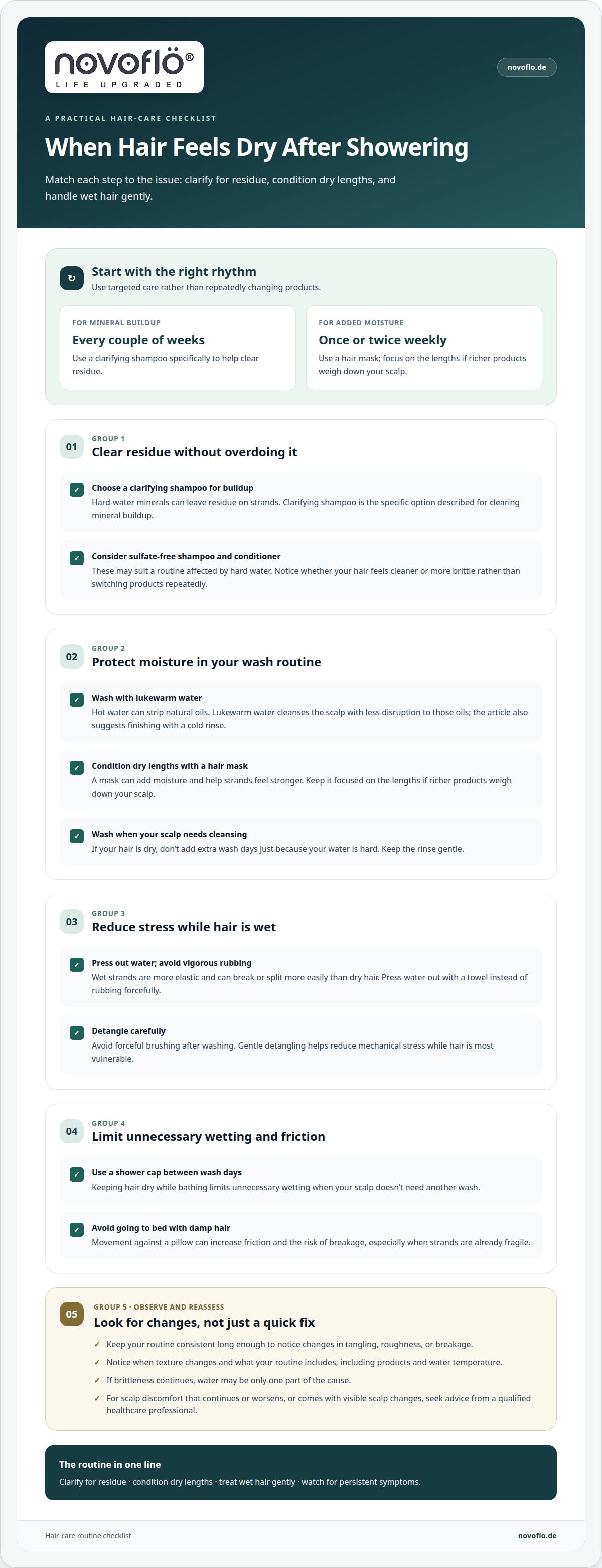
For buildup, use a clarifying shampoo every couple of weeks to help remove residue. Sulfate-free shampoo and conditioner may suit a hard-water routine, but choose a clarifying product specifically to clear mineral buildup.
Hot and Cold Water Effects
Water temperature can affect hair even when minerals aren’t the only concern. Hot water can strip natural oils that help keep hair healthy, while lukewarm water cleanses the scalp with less disruption to those oils.
Wash with lukewarm water, then finish with a cold rinse to close the hair cuticle. If your hair is dry, don’t add extra wash days just because your water is hard; wash when your scalp needs cleansing and keep the rinse gentle.
Signs of Hard-Water Dryness
Notice whether your hair feels rough, dull, or unusually difficult to manage after showering, and whether your scalp feels dry or itchy. Frizz and breakage can also be clues, especially alongside a coated feeling after rinsing.
These signs can suggest a connection between shower water and dry hair, but they don’t identify the cause on their own. Notice how your hair feels after washing with your usual products and water temperature, and whether residue or scalp discomfort persists.
Dry and brittle hair after showering
Hair that feels rough, stiff, or tangled after rinsing can reflect several stresses. Hard-water residue may coat strands, while hot water and rough towel-drying can add strain. If your hair feels dry after every shower, another styling product may not address the cause. Notice when the texture changes and what your routine includes.
Start with your cleansing products. Sulfate-free shampoo and conditioner may suit a routine affected by hard water. For mineral residue, a clarifying shampoo every couple of weeks may help clear buildup. Use it for that specific purpose, rather than repeatedly switching shampoos without noticing whether your hair feels cleaner or more brittle afterward.
A hair mask can add moisture and help strands feel stronger. Use one once or twice weekly, focusing on the lengths if richer products weigh down your scalp. Keep your routine consistent long enough to notice changes in tangling, roughness, or breakage. A mask can improve how hair feels, but it doesn’t remove minerals from shower water.
Handle wet hair gently. Wet strands are more elastic and can break or split more easily than dry hair. After washing, avoid forceful brushing and vigorous towel-rubbing. Instead, press water out with a towel and detangle carefully. These steps reduce mechanical stress while hair is most vulnerable.
Between wash days, wear a shower cap to keep your hair dry while bathing. This limits unnecessary wetting when your scalp doesn’t need another wash. Avoid going to bed with damp hair, too. Movement against a pillow can increase friction and the risk of breakage, especially when strands are already fragile.
Match your response to the problem: clarify for residue, condition dry lengths, and handle wet hair gently. If brittleness continues despite these changes, water may be only one part of the cause. Pay attention to persistent scalp irritation or ongoing breakage rather than escalating treatments without a clear reason.
Hard water and scalp irritation
A dry, itchy scalp after showering can be one sign that hard water is affecting your routine. Mineral residue may leave a film on the scalp, making it harder for moisture and hair-care products to reach the skin. Your scalp may feel uncomfortable even after a thorough rinse.
Pay attention to where and when irritation appears. Note whether itching starts after a shower, persists between washes, or comes with a coated or tight feeling. These details can help you spot patterns, but they don’t prove hard water is the cause: scalp discomfort can have more than one trigger.
Review what touches your scalp, not just the water. Shampoo or conditioner residue can add to a coated feeling, especially if products aren’t rinsed from the roots. Change one part of your routine at a time, such as rinsing more carefully, and observe whether the sensation changes. Avoid adding several new products at once, which makes the source harder to identify.
Minerals such as calcium carbonate and magnesium sulphate are associated with hard water. Deposits can build up on hair and scalp, and a lingering film may affect how products reach them. If your scalp feels itchy alongside dull, coarse hair after showering, water quality may be one factor to consider, not a diagnosis on its own.
Keep a simple note of shower days, products used, and symptoms. A recurring pattern after washing can help distinguish a routine-related issue from occasional irritation. If discomfort continues, worsens, or comes with visible scalp changes, seek advice from a qualified healthcare professional. Hair-care adjustments address your routine, but persistent scalp symptoms deserve proper attention.
Using a showerhead water filter
A showerhead filter treats water at the point of use, rather than throughout your home. The right choice depends on what you want to reduce: chlorine and targeted impurities, or hardness minerals such as calcium and magnesium.
Carbon cartridges in showerhead filters can reduce or eliminate chemicals such as chlorine, making this filter type relevant when chlorine is your concern. But not every shower filter is a water softener. A softener removes calcium and magnesium through ion exchange, directly addressing hardness. If mineral buildup is behind your dry hair, understand this difference before choosing.
Is a water softener or shower filter better for dry hair? A softener addresses hardness by removing calcium and magnesium; a showerhead filter with carbon targets chlorine and certain impurities. Choose based on the water concern you want to address, because these systems do different jobs.
What are affordable hard-water solutions for homes in Egypt? Start with routine changes that don’t require treating the whole home: wash with lukewarm water, wear a shower cap between hair-washing days, and choose sulfate-free shampoo and conditioner. For residue, use clarifying shampoo every couple of weeks. These steps support hair care, but they don’t remove hardness minerals from shower water.
Before selecting a filter, identify the concern behind your symptoms. A chlorine-focused cartridge and a softening system address different water problems. Consider where you want treatment, too: a showerhead filter treats shower water, while a softener addresses calcium and magnesium through ion exchange. Don’t assume a filter reduces hardness unless its function specifically supports that claim.
If reducing chlorine and targeted impurities is your priority, explore a shower filtration option for your bathing routine. Keep the distinction clear: targeted filtration and water softening are different approaches, and neither replaces gentle washing habits for dry hair.
Novoflö: Novoflö shower filter
The Novoflö shower filter is a practical next step if you want to reduce chlorine and targeted impurities in shower water. German-engineered and designed for domestic water conditions in Egypt, it may suit you if hair-care concerns have prompted you to look beyond shampoo and conditioner.
Keep the distinction clear: this filter reduces chlorine and targeted impurities. It isn’t a water softener, so don’t expect it to remove hardness minerals such as calcium and magnesium. If mineral buildup is your main concern, that difference matters. A filter can support a more considered shower routine, while gentle washing and suitable hair care still play their own roles.
If reducing chlorine and targeted impurities fits your needs, explore the Novoflö shower filter.
Make your shower routine more intentional
Hair care doesn’t begin and end with the products on your shelf. The connection between shower water and dry hair is a reminder to look at your whole routine, including what reaches your hair each time you rinse. Treat water as one factor to consider, not a complete explanation for every change in texture or scalp comfort.
Choose your next step based on the concern you want to address. If you’re considering a shower filter, focus on what it is designed to reduce and how that fits your needs. Novoflö offers a shower filter designed to reduce chlorine and targeted impurities in shower water. Keep your hair routine gentle, observe what changes, and make decisions based on what you notice rather than quick fixes.
Visit Novoflö to explore its shower filter and decide whether it fits your shower routine. A more thoughtful routine starts with asking better questions, and you can take that step with confidence.
Frequently Asked Questions
How can showers damage your hair?
Repeated hot rinses, mineral residue, and rough handling can leave hair dry or more vulnerable to breakage. For example, vigorous towel-rubbing adds friction to wet strands, which are more susceptible to snapping. Keep water lukewarm, press out moisture gently, and avoid unnecessary wetting between wash days. These changes reduce routine-related stress without requiring a complete overhaul of your hair-care products.
Does shower water hardness cause dry hair?
Hard water can contribute to dryness by leaving mineral residue on hair and scalp. That buildup may make strands feel coarse or dull and make it harder for hair-care products to reach them. If dryness comes with a coated feeling after showering, note the pattern and the products you use. Water hardness can be one factor, but dryness may have other causes, too.
What are the signs of mineral buildup from hard water on hair?
Hair may feel coated, rough, or stiff after rinsing, look dull, or become harder to manage. Frizz and breakage can accompany these changes. A recurring pattern after showers is more informative than one difficult wash day. Note when the texture changes and whether your usual conditioner seems less effective; these observations can help you assess buildup.
How can I protect dry hair while showering?
Keep your shower routine gentle: use lukewarm water, avoid vigorous towel-rubbing, and handle wet strands carefully. On days you don’t wash your hair, wear a shower cap to keep it dry. After washing, press out water instead of twisting or rubbing. If mineral residue is a concern, clarifying shampoo every couple of weeks may help clear buildup.
What shower water temperature is best for dry hair?
Lukewarm water is the practical choice for washing dry hair because it cleanses the scalp while helping protect natural oils. Very hot water can strip those oils. If comfortable, finish with a cool rinse; this is commonly recommended to close the hair cuticle. Avoid extreme temperature changes that feel uncomfortable, and focus first on keeping the main wash lukewarm.
Do shower filters soften hard water or only remove chlorine?
Shower filters and water softeners don’t all do the same job. A showerhead filter with a carbon cartridge can reduce or eliminate chemicals such as chlorine, while a water softener removes calcium and magnesium through ion exchange. A chlorine-focused filter shouldn’t be treated as a softener for hard water. Match the system to the water concern you want to address rather than assuming filtration means softening.


