


Prevent Hair Color Fading From Shower Water by Choosing a Filter
Your shower water may be one reason your hair color looks dull sooner than expected. Heat can make pigment rinse away more easily, while mineral buildup may leave hair rough or less shiny. To help prevent hair color fading from shower water, wash with lukewarm water, shampoo less often, and consider filtration that reduces chlorine and targeted impurities.
If your hair feels different after using a filter, the change may reflect a difference in the water reaching it. Hair texture and manageability are also influenced by existing buildup, color treatment, and dryness, so a new feel doesn’t tell the whole story. Water is part of your routine, too, not just shampoo.
This guide explains how water conditions can affect colored hair, which signs may point to mineral buildup, and how filtration can complement gentler washing habits. The aim is practical: understand what may be affecting your color and which changes can help preserve its shine.
Key Takeaways
- Chlorine and mineral deposits can affect dyed hair’s shine and feel. Learn which water-related factors may contribute to fading.
- Filtration can reduce exposure to some shower-water impurities, but filter media and capabilities matter.
- Rust-colored marks, residue, or changes in how your hair feels may offer clues about metals in tap water.
- Adjust your wash routine with gentler habits to help your color stay vibrant for longer.
1. Can shower water turn blonde hair green?
Shower water can contribute to dullness and faster color loss, but blonde hair turning green usually points to metal deposits, especially copper. Chlorine can make hair color fade up to 60% faster. Hard-water minerals, including calcium, magnesium, and iron, may also cling to strands, leaving dyed hair dull, dry, or rough. Porous, damaged hair holds pigment less effectively, so it can show these changes sooner.
Swimming adds another kind of chlorine exposure. Before entering a pool, wet your hair thoroughly with clean water so it absorbs less chlorinated water. Rinse it afterward, then apply conditioner to help restore softness. Copper in water can build up on blonde or lightened hair and cause a green cast. Chlorine may contribute to fading, but it isn’t the only possible cause of a green tint.
Wash dyed hair with lukewarm water. Hot water can lift the hair cuticle, making pigment easier to wash away; finish by rinsing conditioner with cool water. Shower-filter prices in Egypt vary by filtration method, cartridge design, and replacement needs. Compare which impurities a filter is designed to reduce, especially if chlorine is a concern.
Choose a gentle, hydrating, color-safe shampoo and conditioner. Avoid formulas with harsh sulfates such as SLS or SLES, which can strip oils and color molecules. If mineral buildup leaves hair rough or dull, a chelating or clarifying shampoo may help remove residue. Follow the product label and condition well afterward. Frequent clarifying can also strip color, and there’s no universal schedule for every head of hair.
Keep showers focused and avoid unnecessary rinsing. These steps can help prevent hair color fading from shower water, but they won’t address every cause of color change. Sun exposure, heat styling, and existing damage can also affect how vibrant dyed hair looks.
2. Activated carbon and KDF-55 shower filtration
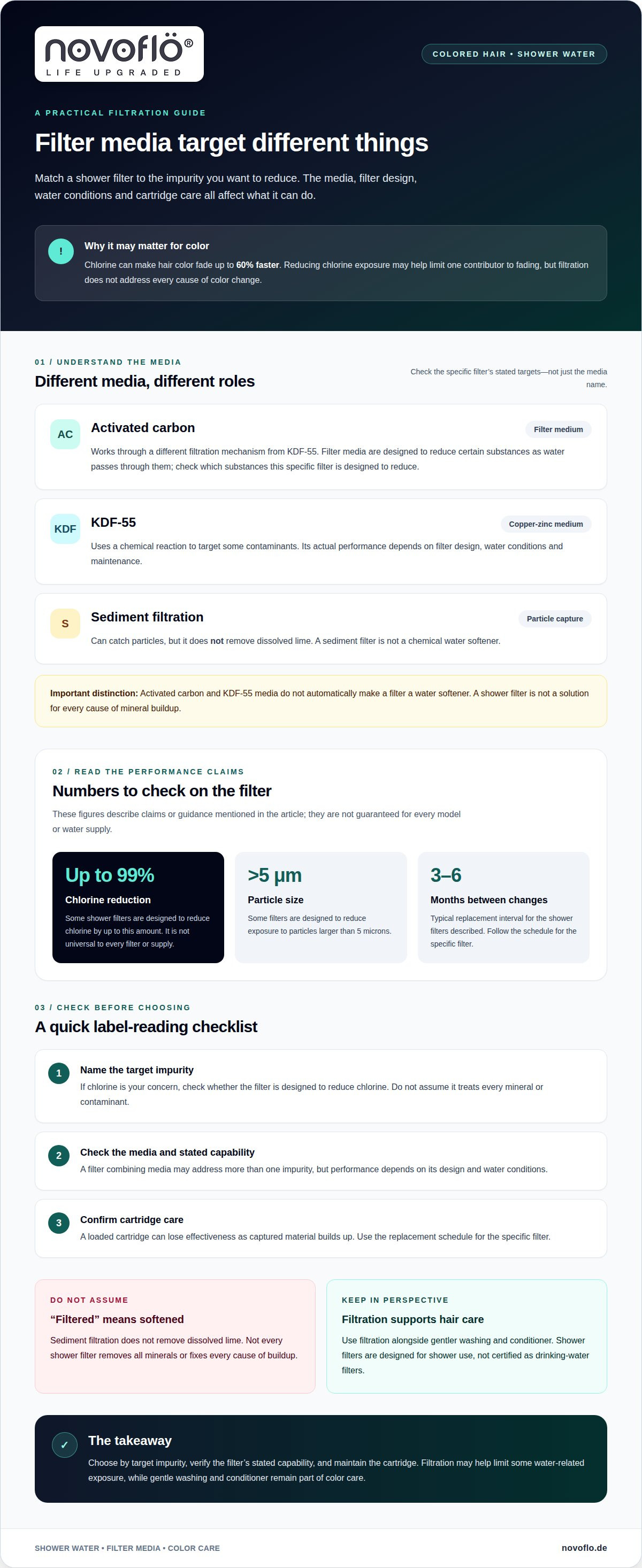
Activated carbon and KDF-55 work through different filtration mechanisms. Some filter media are designed to reduce certain substances as water passes through them. KDF-55 is a copper-zinc medium that uses a chemical reaction to target some contaminants. A filter combining media can address more than one impurity, but performance depends on its design, water conditions, and maintenance. Check which substances the specific filter is designed to reduce.
For colored hair, reducing chlorine exposure may help limit one contributor to fading. Some shower filters are designed to reduce chlorine by up to 99%, but that figure isn’t universal to every model or water supply. Filtration can also reduce exposure to particles larger than 5 microns in filters designed for that purpose. A shower filter is not automatically a solution for dissolved lime or every cause of mineral buildup.
Know the difference between filtering and softening. A sediment filter can catch particles, but it doesn’t remove dissolved lime because it isn’t a chemical water softener. Activated carbon and KDF-55 media also don’t make every filter a water softener. If hard-water residue leaves hair feeling coated, check the filter’s stated capabilities rather than assuming all minerals are removed.
Maintenance matters. The typical replacement interval for the shower filters described is 3-6 months; follow the schedule for the specific filter. A loaded cartridge can lose effectiveness as captured material builds up. Keep shampoo and conditioner in your routine, since filtration supports water care rather than replacing hair care. Shower filters are designed for shower use, not certified as drinking-water filters. To compare a shower filtration approach, focus on its target impurities, media, and cartridge care. Used alongside gentler washing, filtration may help extend the time your color looks fresh, while moisture-focused conditioner supports softness.
3. Signs of iron or copper in tap water
Hair may reveal a change in water conditions, but it can’t identify a metal by itself. Hard water contains minerals such as calcium, magnesium, and iron. Mineral deposits can cling to strands, leaving dyed hair dull, dry, or harder to manage. If your color looks less glossy and your hair feels rough after washing, compare those changes with what you notice around the shower.
Look for visible residue on fixtures and in the basin. Rust-colored marks can point to iron deposits; blue-green staining can point to copper. These clues don’t prove what is in your tap water, but they can help you spot a pattern. Note whether marks return after cleaning and whether similar residue appears near more than one water outlet.
Copper is worth noting if you have blonde or lightened hair, as deposits can affect its tone. Iron and other hard-water minerals can contribute to dullness and dryness. Record when the color shift began, whether it followed a change in your washing routine, and which areas of your hair feel most affected. A timeline can help distinguish a recurring water-related pattern from a one-off change after coloring or styling.
Keep your observations simple and consistent. Check the showerhead, tap, and basin for residue, then notice whether your hair feels rough or looks dull after washing. Don’t treat one stain or color change as a diagnosis. Hair condition, existing damage, and styling habits also affect shine and color retention.
If the signs keep recurring, focus on the likely exposure route: water contacting your hair during each wash. A shower filter designed to reduce targeted impurities can address some water-related exposure, while a gentle hair-care routine supports softness. Filtration does not remove every dissolved mineral, so consider which impurity you want to reduce. Track changes in how your hair feels and visible residue over time, rather than relying on color alone.
4. Washing colored hair less often
Every shampoo creates another rinse cycle for treated hair. Wash colored hair no more than 2-3 times a week, adjusting around scalp comfort and activity. More frequent washing can make color fade faster. If your scalp allows, leave three or four days between shampoos. Less time under running water also means fewer opportunities for dye to wash out.
After a fresh color service, wait at least 24 to 48 hours before shampooing. That pause gives the hair cuticle time to settle after treatment. When you do wash, use lukewarm water and focus shampoo on your scalp. Let the rinse clean the lengths without scrubbing them. Rinse conditioner with cool water to help close the cuticle and support shine.
Between wash days, dry shampoo can absorb excess oil at the roots. Apply it sparingly and brush it through instead of layering it repeatedly. If your ends feel dry, use conditioner on the lengths during your next wash. You can also use a color-depositing mask in place of regular conditioner every two to three washes to refresh your tone.
Washing less often won’t protect color from every source of fading. Sunlight can dull dye over time, so wear a hat or scarf during extended outdoor exposure. For blow-drying or straightening, choose the lowest comfortable heat setting and apply heat protectant first. Keep shower rinses purposeful, especially on days without shampoo. If water exposure remains a concern, explore shower filtration options as one part of a color-care routine.
Novoflö: Novoflö shower filter
Novoflö’s shower filter reduces chlorine and targeted impurities in shower water, complementing gentler washing and conditioning. It’s a practical step if you’re addressing water exposure as one possible contributor to dullness or color fading. Designed for domestic water conditions in Egypt, the system filters water at the shower and complements rather than replaces shampoo or conditioner.
Choose filtration as part of a broader routine, not as a promise that color will never fade. Hair condition, washing habits, heat styling, and sunlight can still affect how long dyed color looks vibrant. If you want to make shower-water quality part of your color-care plan, visit novoflo.de.
Make Your Shower Routine Work for Your Color
Protecting colored hair doesn’t require changing everything at once. Start with one deliberate adjustment, then notice how your hair feels and looks after washing. A simple routine makes it easier to identify what helps and what still leaves your color looking dull.
To prevent hair color fading from shower water, treat water exposure as one part of your color-care plan, not the only factor. Keep controllable habits consistent, from wash frequency to heat styling, and consider whether shower filtration suits your home and routine. Choose a next step you can maintain without adding unnecessary complexity.
If you want to make water quality part of that plan, contact Novoflö for help. Take a thoughtful next step, and give your color care a stronger foundation.
Frequently Asked Questions
Why does my hair feel different after using the filter?
Filtration changes the water that contacts your hair, but existing dryness and product residue still affect how it feels. If strands feel coated, consider whether styling products or conditioner are building up. If they feel rough, note whether this happens after each wash. Novoflö’s shower filter reduces chlorine and targeted impurities, but it doesn’t soften water or remove every possible cause of texture changes.
Can shower water turn blonde hair green?
A green cast can appear on blonde hair when copper-containing water deposits build up. This differs from ordinary fading, which tends to make color look less vivid rather than distinctly green. Note whether the tint follows pool or tap-water exposure and whether it remains after your hair dries. This pattern can give a colorist useful context when assessing the change.
How much can I save on color with a filter?
Any savings depend on local salon prices, how often you refresh your color, and whether your appointments become less frequent. Compare your usual appointment schedule with the one you follow after changing your routine. Include cartridge replacement costs when estimating filtration expenses. Count actual changes to your appointments rather than assuming a filter will automatically reduce salon visits.
Why Does This Happen?
Hair color changes with repeated washing, heat styling, sunlight, and water exposure. Previously lightened or chemically treated strands can also be more porous. Different triggers leave different clues: a change noticed after washing differs from gradual dullness during sunny periods. Track when the color shifts, and change one routine factor at a time to see what affects the result.
Why does my hair color fade so fast?
Rapid fading can result from frequent shampooing, porous strands, or repeated heat and sun exposure. Water may contribute, but it isn’t the only factor. Notice when the color looks different: a change after several washes suggests a different pattern from gradual dullness after time outdoors. Adjust one habit at a time, such as wash frequency, so you can identify what helps.
How does shower water cause dyed hair color to fade?
Each rinse can carry loose dye from the hair, while chlorine exposure may speed color loss. Minerals can also cling to strands and dull their appearance, making color look less vibrant. These effects can overlap, so note whether your hair looks faded, feels coated, or changes after particular showers. A filter designed to reduce targeted impurities addresses water exposure, not every cause of fading.


