


How Shower Filters Work and What They Can Change
How shower filters work depends on water passing through filter media that reduce targeted impurities, including chlorine. This can help reduce chlorine-related odors and make showering more comfortable for skin and hair. A shower filter won’t remove the calcium and magnesium that cause hard water, so it isn’t a substitute for water softening.
If your skin feels tight or your hair seems dull after showering, you might first look to cleansers and conditioners. But the water that touches your body is part of the routine, too. A filter can reduce certain substances in shower water, but it can’t promise to solve every skin or hair concern.
Learn how filter media treat water, why flow rate affects filtration and cartridge life, and how to recognize when a cartridge may need replacing. You’ll also see what to expect for skin, hair, and shower odors, and where filtration has limits, so you can decide whether a shower filter suits your needs.
Key Takeaways
- Learn how filter media such as activated carbon can reduce chlorine, and why that doesn’t mean a shower filter removes every impurity.
- Understand why cartridge life depends on water conditions and shower use, and what to consider when planning a replacement.
- See how shower flow affects the water moving through the filter and what that means for filtration and cartridge life.
- Set realistic expectations for skin, hair, and odors, and see when Novoflö’s shower filter may suit your routine.
What are shower filters and do they really work?
A shower filter sits between the water supply and showerhead, treating water as it passes through filter media. To understand how shower filters work, focus on the contaminants the media targets rather than assuming one filter removes everything.
How Filters Reduce Chlorine
Activated carbon adsorbs chlorine and some other compounds on its surface. Granular activated carbon also removes many contaminants that cause odors, color, and foaming, according to the U.S. Environmental Protection Agency. Vitamin C works differently: it reacts with free chlorine. The media determine what a filter can reduce, while water flow affects how long it contacts those media.
Chlorine Effects on Hair and Skin
Chlorine exposure can contribute to dryness or irritation for some people, and hair may feel rough or harder to manage after showering. A filter designed to reduce chlorine can limit this specific exposure, but it can’t address every cause of skin or hair changes. Calcium and magnesium cause hard water; water softeners treat hardness, while shower filters do not.
Chlorine and Heavy-Metal Reduction
Some filters combine activated carbon with other media to target chlorine, sediment, or certain metals. KDF-55 uses copper and zinc in a redox process that can remove chlorine and some heavy metals. Knowing how shower filters work also means checking the media and its stated targets, rather than assuming every model treats the same substances.
A shower filter treats water at one showerhead, while a whole-house filter treats water entering the home. Water softeners address calcium and magnesium, which shower filters generally don’t remove.
To install a filter on a standard shower in Egypt, unscrew the showerhead, attach the filter to the shower arm, then reconnect the head. Wrap threaded connections with Teflon tape two to three times, then run water for about 20 seconds to flush the new filter.
A filter can restrict water flow if sediment accumulates or the media become clogged. Follow the product’s flushing and replacement instructions. Neglected media and stagnant water can create maintenance concerns, and a shower filter does not disinfect water.
Filter replacement intervals and warning signs
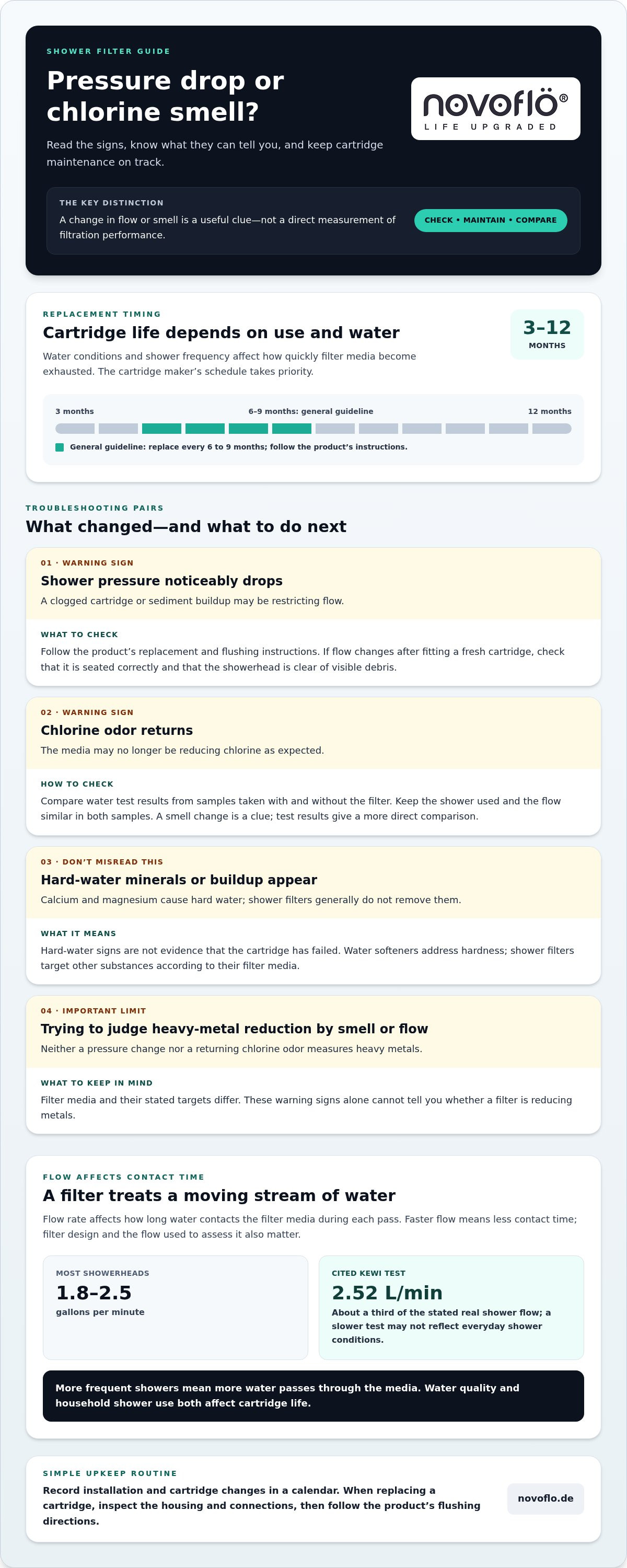
Most shower filter cartridges need replacement every 3 to 12 months, depending on water conditions and shower use. A general guideline is every 6 to 9 months, but the cartridge maker’s schedule should take priority. In Egypt, household water conditions and how often the shower runs affect how quickly filter media become exhausted.
For a direct comparison in Egypt, Novoflö Essential Filter Cartridges (3-Pack) are listed at 1,950 EGP per piece as of 2026-10-28. The cartridge price does not establish a universal replacement interval: follow the schedule for the filter you use and consider the household’s actual shower frequency.
Warning signs and maintenance
A noticeable drop in shower pressure can indicate a clogged cartridge or sediment buildup. If chlorine odor returns, the media may no longer be reducing chlorine as expected. Neither sign measures heavy metals. Calcium and magnesium that cause hard water aren’t evidence of cartridge failure, since shower filters generally don’t soften water.
Record installation and cartridge changes in a calendar. When replacing a cartridge, inspect the filter housing and connections, then follow the product’s flushing directions before showering. If flow changes after fitting a fresh cartridge, check that it is seated correctly and that the showerhead is clear of visible debris.
How to check filter performance
To assess chlorine reduction, compare water test results from samples taken with and without the filter. Keep sampling conditions consistent, including the shower used and a similar flow, so the comparison reflects the filter rather than a change in use. A change in smell is a clue, not a measurement; test results offer a more direct comparison.
Pair that comparison with the replacement schedule and changes in flow. For routine upkeep, use the right shower filter cartridge for your system and replace it according to its instructions. Timely maintenance helps keep filtration working as intended, while a cartridge past its service interval can no longer be relied on to perform consistently.
How shower flow rate affects filtration and cartridge life
Flow rate determines how quickly water moves through a shower filter’s media. Most shower heads run at 1.8 to 2.5 gallons per minute, so the filter treats a steady stream rather than a slow trickle. The principles behind how shower filters work include contact time: faster flow gives water less time against the media during each pass. Performance depends on both the filter design and the flow used to assess it.
Activated carbon adsorbs targeted compounds as water passes across its surface. Copper-zinc KDF media uses a redox process to target chlorine and some metals. With both types, flow affects how long water contacts the media. For context, a cited KEWI test used 2.52 L/min, about a third of the stated real shower flow. A test at a slower rate may not reflect everyday shower conditions, so how shower filters work in practice depends partly on matching test flow to actual use.
Some filter media work physically. Ceramic beads can act as a barrier, sieving sediment and larger particles from water. As particles accumulate, they can obstruct passage and reduce flow. Hard water is a separate issue: dissolved calcium and magnesium cause hardness, and a shower filter doesn’t remove these minerals. Mineral buildup may still appear on shower surfaces even when the filter targets other impurities.
Cartridge life depends in part on how much water passes through the media. More frequent showers mean more water treated, and water quality affects how quickly the media become loaded. A household with several daily showers may use a cartridge faster than a lightly used bathroom. Compare the filter’s stated operating flow with your usual shower, then monitor pressure. A decline may indicate blockage or a cartridge nearing replacement, but it doesn’t show whether hardness minerals were filtered.
Expected benefits for skin, hair, and shower odors
Shower filtration can reduce exposure to specific contaminants, but it won’t resolve every skin or hair concern. If chlorine contributes to dryness after bathing, reducing it in shower water may help limit that exposure. Match the filter to the issue: a chlorine-focused filter targets chlorine, while a softener addresses the calcium and magnesium that cause hard water.
Survey results offer a signal, not a promise for each household. In a survey reported by Curo, 94% of customers noticed softer, more hydrated skin and less irritation. Curo also reported that 100% of customers said their hair felt healthier. These responses describe customers’ experiences; they don’t prove that filtration alone caused each change or that every person will notice the same effects.
Odor can offer a clue about water conditions. Sulfur can smell like rotten eggs, while chlorine may produce a chemical odor. Activated carbon can reduce many odor-causing contaminants, but results depend on the filter media and compounds present. A fresher-smelling shower is welcome, but smell alone can’t identify every contaminant or confirm its level.
Set a clear baseline before judging any change. Note whether your skin feels tight after showering, whether your hair feels rough after rinsing, and whether the shower water has a persistent odor. Compare these observations after using a maintained filter, keeping your cleanser and routine consistent. This makes the comparison more useful, though it won’t diagnose a skin condition or identify every water contaminant.
Keep the limits in view. A shower filter isn’t a water softener, so it won’t remove hardness minerals or resolve every cause of dryness, irritation, or hair changes. For a chlorine-focused step in your routine, explore shower filtration options and consider whether targeted chlorine reduction matches your concern.
Novoflö: Novoflö shower filter
The Novoflö shower filter is designed for domestic water conditions in Egypt and reduces chlorine and targeted impurities in shower water. If chlorine-related dryness or hair concerns have you reconsidering your routine, it offers a focused filtration step at the shower. German-engineered, it is designed to support healthier skin and hair by addressing water quality before the water reaches your body.
Choose a shower filter when your priority is reducing chlorine and other targeted impurities at the shower. It isn’t a water softener, so it won’t remove calcium and magnesium or resolve every hard-water issue. Keep this distinction in mind when setting expectations.
Explore the Novoflö shower filter to see whether targeted shower filtration fits your needs. For more information, visit novoflo.de.
Make your next shower choice with purpose
Understanding how shower filters work can turn a general concern into a more informed decision. Rather than adding another product out of habit, consider what you want to change about your daily shower. Knowing your priority makes it easier to decide whether filtration belongs in your personal-care routine.
Keep expectations grounded in the specific concern you want to address. A filter is a targeted water-treatment step, not a substitute for every part of hair or skin care. Choose with intention, then observe whether the change suits your household’s needs over time.
If you’re weighing whether a shower filter is the right next step, bring your questions to Novoflö. Contact Novoflö with your filter questions and make your decision with greater clarity. Your everyday routine can start with a more informed choice.
Frequently Asked Questions
Do showers help with hard water?
No. Showering doesn’t change hard water, and a shower filter doesn’t soften it. Hardness comes from dissolved calcium and magnesium; water softeners reduce these minerals through ion exchange. Scale on a showerhead or cloudy residue on glass indicates mineral deposits, not proof that a chlorine-focused shower filter has failed. Match the treatment to the problem.
Does water flow speed really change how a filter works?
Yes. Faster flow gives water less contact time with filter media on each pass, which can affect treatment. For a practical comparison, check shower flow before and after installing a filter, using the same setting and position. If flow drops over time, sediment or a loaded cartridge may be restricting passage. Flow changes alone don’t reveal which contaminants are being reduced.
What Is KDF 55 and KDF 85 Media, and Why Does It Matter?
KDF-55 is copper-zinc media that uses a redox process to target chlorine and some heavy metals. The KDF-85 label identifies another media grade, but the grade name alone doesn’t establish what a particular shower filter reduces. Treat each product’s stated contaminant targets as the useful detail. For example, don’t assume a filter addresses lead simply because its description mentions KDF.
What Problems Does Unfiltered Shower Water Cause?
Unfiltered shower water may contain chlorine, sediment, or other substances a shower filter is designed to target. Chlorine exposure can contribute to dryness or irritation for some people, while sulfur can cause a rotten-egg odor. These effects can have different causes, so one symptom doesn’t identify a contaminant. If a smell persists, note whether it occurs only in the shower or elsewhere in the home.
Why Is Chlorine Present In Water?
Municipal water systems use chlorine for disinfection, and varying amounts may remain after treatment. Its presence is therefore linked to water treatment before it reaches homes, not necessarily to a problem with the shower. A chlorine smell at the tap, for example, may draw attention to residual chlorine, but smell alone can’t reveal its concentration or establish whether water is safe.
What types of shower filter media are used, such as KDF, activated carbon, and vitamin C?
Common filter media include activated carbon, copper-zinc KDF, and vitamin C. They work differently: carbon adsorbs targeted compounds, KDF uses a redox process, and vitamin C reacts with free chlorine. Some filters also use ceramic beads to trap sediment and larger particles. Combining media doesn’t automatically mean broader treatment; look at the specific contaminants the filter is designed to reduce.


