


How Chlorine and Hard Water Affect Keratin-Treated Hair
Chlorine doesn’t automatically ruin a keratin treatment, but repeated exposure can weaken its smooth finish. The practical answer to how to protect keratin-treated hair from tap water is to wash no more than two to three times a week, use warm water, and keep pool water off your hair where possible. After treatment, wait 3 to 4 days before wetting your hair.
If your hair feels rough or looks dull sooner than expected, chlorine may not be the only factor. Calcium and magnesium in hard water can build up on hair and affect how long a keratin treatment lasts. This guide explains how chlorine, mineral-heavy water and water temperature affect treated hair, then offers practical ways to reduce exposure and protect your results. The aim is a manageable routine, not a complicated list of products.
Key Takeaways
- Choose sulfate-free hair care to help reduce the stripping that can shorten a keratin treatment’s smooth finish.
- Learn why calcium and magnesium buildup can leave treated hair feeling rough, even when your routine hasn’t changed.
- Use sensible water temperatures and pool precautions to limit avoidable stress on treated hair.
- See when a shower filter that reduces chlorine and targeted impurities may help make your daily rinse gentler.
1. Does Chlorine Ruin Keratin?
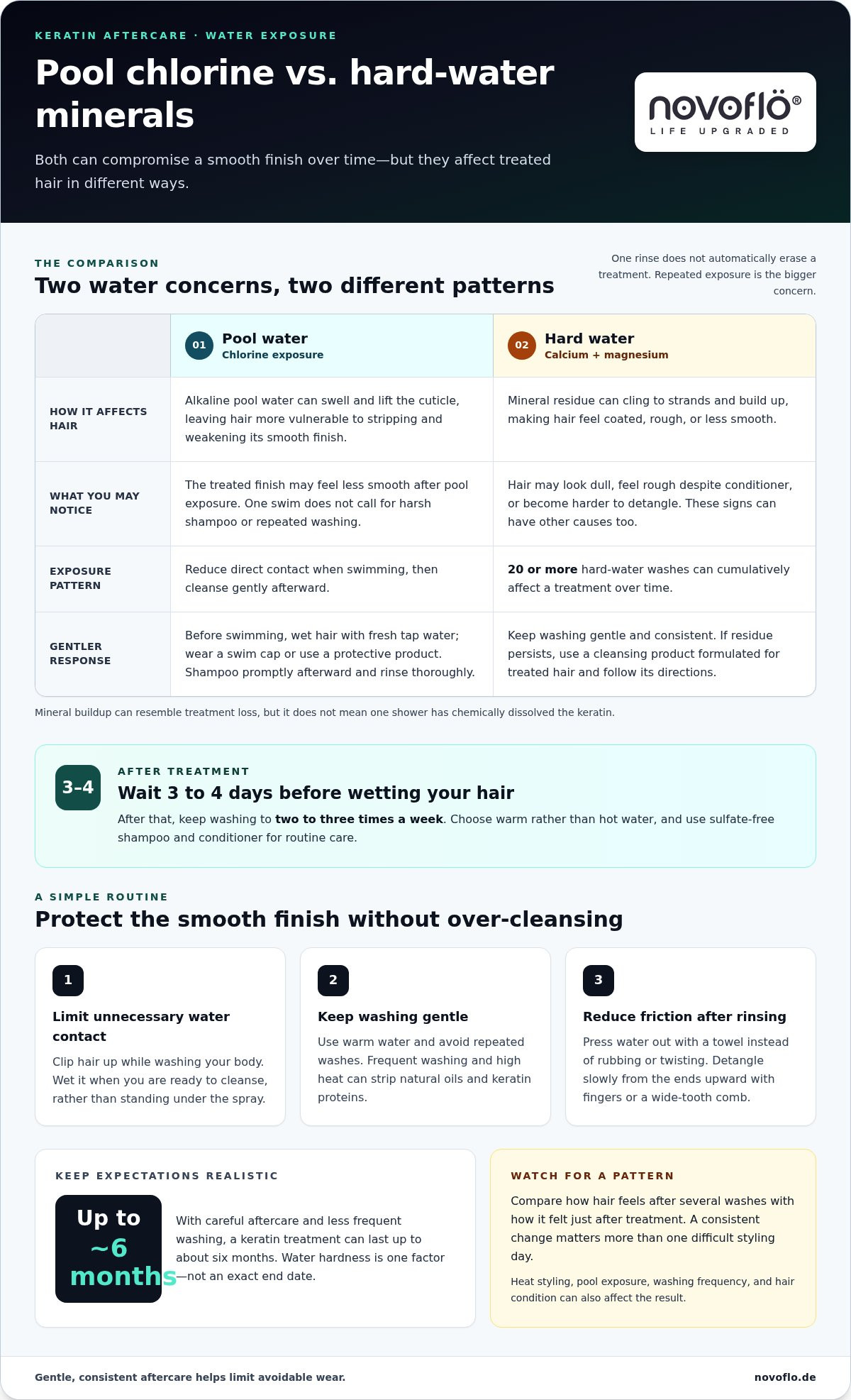
Chlorine doesn’t instantly erase a keratin treatment, but pool exposure can compromise the hair’s smooth finish. Alkaline pool water can swell and lift the cuticle, making hair more vulnerable to stripping. The practical approach is to limit exposure and cleanse gently afterward. One swim doesn’t call for harsh shampoo or repeated washing.
After treatment, wait 3 to 4 days before wetting your hair. Then keep washing to two to three times a week, using warm water rather than hot water. Frequent washing and high heat can strip natural oils and keratin proteins. Choose sulfate-free shampoo and conditioner for routine care, and follow the product directions.
Before swimming, rinse your hair with fresh tap water so dry strands are less likely to absorb pool water. Wear a swim cap or apply a protective product. After swimming, wash promptly with a keratin-care shampoo. Rinse thoroughly, then apply a sulfate-free conditioner to help maintain softness.
Can a chelating or clarifying shampoo remove a keratin treatment? It can remove buildup, but a strong cleansing shampoo may also strip away some of the treatment. Use it cautiously rather than as your regular shampoo, and choose sulfate-free keratin-care products for routine washing.
For everyday rinses, use warm water and avoid unnecessary repeat washes. If you swim, keep the routine simple: rinse with fresh water before swimming, wear a cap or use a protector, then shampoo promptly afterward. These steps reduce direct chlorine contact while complementing the aftercare instructions for your specific treatment.
2. Calcium and magnesium and treatment longevity
Calcium and magnesium are the minerals that make water hard. During repeated rinses, mineral residue can cling to hair, leaving strands dull, coated, or less smooth. That residue changes how hair feels and behaves. It doesn’t mean one shower has chemically dissolved the keratin treatment. The bigger concern is cumulative exposure: 20 or more hard-water washes can affect a treatment over time.
Pay attention to how your hair feels after rinsing. It may feel rough despite conditioner, look less glossy or be harder to detangle. Mineral deposits can cause these changes, although dryness and styling can affect texture, too. Compare how your hair feels after washing with how it felt just after the treatment. A consistent change over several washes matters more than one difficult styling day.
Treatment longevity depends on more than water hardness. Washing frequency, pool exposure, heat styling and your hair’s condition all affect the result. With careful aftercare and less frequent washing, a keratin treatment can last up to about six months. Hard water may contribute to a faster loss of smoothness, but it does not determine an exact end date.
Use a simple routine to limit avoidable wear. Apply conditioner through the mid-lengths and ends, where roughness often shows first. Avoid repeatedly washing your hair just to remove a coated feeling: extra cleansing can increase friction and strip the treatment. If residue persists, choose a cleansing product formulated for treated hair and follow its directions rather than using an aggressive cleanser.
Look for patterns rather than judging individual showers. If dullness and tangling build after repeated rinses, mineral-heavy water may be contributing. Protecting the smooth finish means managing exposure while keeping aftercare gentle and consistent.
3. Frizz and water temperature
Frizz after a shower can mean treated hair feels rougher or less smooth. Water temperature is one part of your routine, along with drying and styling. Wash with warm water. Keratin aftercare recommends warmth to avoid stripping natural oils and keratin proteins. Very hot water works against that goal, especially if you stay under the spray for a long time or repeatedly rinse the same section.
Keep the temperature comfortable and consistent from shampooing through the final rinse. If you’re wondering how to protect keratin-treated hair from tap water, start by reducing unnecessary exposure. Direct water over your scalp and let it run through the lengths, handling wet hair gently. Wet strands tangle easily, so avoid rubbing them roughly with a towel. A steady routine is easier to maintain than constant adjustments.
Manage water exposure during the rest of your shower, too. Clip treated hair up while washing your body, then wet it when you’re ready to cleanse. This limits unnecessary contact with water and avoids standing under a hot spray while shampoo waits. If the bathroom gets steamy, use ventilation rather than turning up the shower temperature.
After washing, press the water out with a towel instead of twisting or scrubbing your hair. Apply conditioner as directed, focusing on lengths that feel dry or catch when combed. Detangle slowly from the ends upward with your fingers or a wide-tooth comb. These steps reduce friction, which can make frizz more noticeable on treated hair.
Heat styling adds another source of heat. Let your hair air-dry when practical, and apply a protective product before using hot tools. Keep the tool moving rather than holding heat on one section. When considering how to protect keratin-treated hair from tap water, separate shower habits from styling habits. Frizz after a hot shower points to one routine; frizz after blow-drying calls for a review of heat and towel handling.
4. How hard-water minerals affect keratin-treated hair
Does tap water damage keratin-treated hair? Repeated exposure to hard water can affect its smooth finish, but that’s different from one rinse instantly removing the treatment. Calcium and magnesium can leave mineral deposits on hair. Over time, this residue can coat strands, making them feel rough, look dull and become harder to detangle. Twenty or more hard-water washes can cumulatively affect a keratin treatment.
That gradual change matters. A mineral film can make hair feel coated even after shampooing, while friction during washing and styling can add to the roughness. The result may resemble treatment loss: less shine, more tangling or a finish that feels less smooth. These signs don’t prove minerals are the only cause. Heat styling, pool exposure and washing frequency also affect treated hair.
Look for a pattern rather than judging a single wash. Note when dullness or tangling appears, whether it follows repeated rinses and how your hair responds to conditioner. Keep your usual aftercare steady as you observe. Changing several products at once makes it harder to identify what’s affecting the finish. If you use a product to cleanse away buildup, follow its directions and choose one suitable for treated hair.
The key distinction: a shower filter designed to reduce chlorine and targeted impurities is not a water softener, so don’t assume it removes calcium or magnesium. Match the solution to the issue. For chlorine and targeted impurities in shower water, explore a shower filter for daily rinsing; for mineral hardness, focus on gentle hair care and limiting unnecessary washing.
Novoflö: Novoflö shower filter
Novoflö’s shower filter is a practical option if you’re concerned about chlorine and targeted impurities in your shower water. German-engineered for domestic water conditions in Egypt, it reduces chlorine and targeted impurities to support healthier skin and hair. Use it as part of your routine if daily rinsing may be affecting your hair’s feel, alongside gentle washing and keratin-safe aftercare.
Keep the distinction clear: a shower filter isn’t a water softener, so it isn’t a solution for calcium and magnesium hardness. Match the approach to the concern. For shower-water filtration, visit Novoflö’s shower filter page to learn more.
Build a Routine That Works Beyond Salon Day
Treat your next keratin appointment as the start of a care routine, not a one-day transformation. Before your appointment, consider your usual shower habits, swimming and styling. That context helps you choose aftercare that fits real life rather than relying on a generic routine. A practical approach to protecting keratin-treated hair from tap water starts with knowing which habits you can maintain consistently.
Choose one manageable adjustment and give it time before changing several habits at once. Consistency makes it easier to see what supports the finish you want. If shower-water quality concerns you, consider whether filtration belongs in your personal-care routine. Base your decisions on the specific issue you want to address, and follow your treatment’s aftercare directions.
For guidance on your next step, contact Novoflö for hair care advice. A considered routine can help you feel more confident about caring for your treated hair.
Frequently Asked Questions
Does Chlorine Ruin Keratin?
Chlorine can contribute to a keratin treatment losing its smooth feel, especially with repeated pool exposure. One swim doesn’t mean the treatment is immediately ruined. For example, hair that feels rough after swimming may need gentle cleansing and conditioning, not aggressive scrubbing. Consider pool exposure when assessing changes, since heat styling, washing habits and water minerals can also affect your hair’s appearance.
Where does a shower filter fit?
A shower filter works where water reaches your hair. It can help reduce chlorine and targeted impurities during regular showers, alongside treatment-specific aftercare. A practical part of protecting keratin-treated hair from tap water is matching filtration to your concern. A filter doesn’t replace shampoo, conditioner or pool precautions, and it isn’t a solution for every water issue.
How does hard water affect keratin-treated hair?
Hard water can leave calcium and magnesium residue on hair, making treated strands feel coated or less smooth. If your hair feels different after repeated rinses, compare its texture and detangling needs over time rather than judging one wash. Conditioner can improve feel, but it doesn’t change the mineral content of the water. Chlorine exposure and heat styling may also contribute to changes.
How can I protect keratin-treated hair when showering?
Keep your shower routine gentle and consistent. Use warm water, avoid rough handling while your hair is wet, and limit unnecessary rinsing. To protect keratin-treated hair from tap water, start with practical habits: clip your hair up while washing your body, then cleanse it as part of your planned hair wash. Follow your treatment’s aftercare directions and choose suitable products.
Does a shower filter remove chlorine and minerals from tap water?
Shower filters differ in what they target. Novoflö’s shower filter reduces chlorine and targeted impurities, but it is not a water softener or a solution for removing hard-water minerals. Calcium and magnesium are associated with hard water. If both concerns matter to you, distinguish chlorine reduction from water softening when choosing an approach.
Which shower filters work best for hard water and chlorine?
Choose a product based on the water concern, not a broad “all-in-one” promise. For chlorine and targeted impurities in shower water, Novoflö’s shower filter is designed to reduce those substances. Hardness from calcium and magnesium is a separate issue that calls for water softening, not a chlorine-focused shower filter. Match the product’s stated purpose to the problem you want to address.


