


Curly Hair Frizz from Hard Water: What Causes It and How It Affects Curls
Soft water is often the better fit for curly hair because it contains fewer calcium and magnesium minerals that can build up on strands. If hard tap water leaves your curls dry, rough, tangled or frizzy, the most useful solutions for curly hair frizz from hard tap water start with understanding what’s in your shower water, not just changing your styling routine.
You may know the frustration: curls feel coated after washing, lose definition, or resist moisture despite your best efforts. This article explains how hard-water minerals can affect curl texture, why softer water may help, and what clarifying shampoo, conditioning care, and shower filtration can and can’t do. You’ll have a clearer basis for deciding whether water quality could be contributing to your hair concerns.
Key Takeaways
- Calcium and magnesium can build up on curls, leaving strands rougher and making moisture harder to retain.
- Compare how your hair feels after washing: persistent dryness, tangling and reduced curl definition may point to water as one factor.
- Clarifying shampoo can help lift mineral residue, while conditioning care supports softness but doesn’t prevent new buildup.
- Know the difference between filtration and water softening: a shower filter’s effect depends on the impurities it is designed to reduce.
Is Hard Water or Soft Water Better for Curly Hair?
Soft water contains fewer calcium and magnesium minerals, which can build up on curls. Lower mineral content may help natural oils support moisture and hydration.
Calcium and Magnesium Buildup
Calcium and magnesium buildup is the mineral film left when hard water deposits these minerals on hair. On curls, this residue can make it harder for moisture and natural oils to reach or stay in the strands. Hair may feel dry soon after washing, even when you use conditioner. Soft water leaves less mineral residue behind, so it may suit curls that feel coated or resistant to hydration.
Rough Cuticles and Frizz
Mineral buildup can roughen the cuticle, the outer layer of each hair strand. Rough strands can catch on one another instead of sliding smoothly, increasing tangling and frizz. This can disrupt styling: defined curls may look less smooth, and strands may feel stiff or less flexible. If your curls snag during detangling after a hard-water wash, residue may be one factor affecting their texture.
Sticky Mineral Residue
Hard-water minerals can build up over repeated washes, leaving hair coated or sticky. That sensation can resemble excess styling product, but it may persist even after you use less gel or cream. Residue can also collect on the scalp and hair, making both feel less clean. Notice whether the coating returns after washing with the same tap water; this pattern can help distinguish mineral buildup from a single heavy application of styling products.
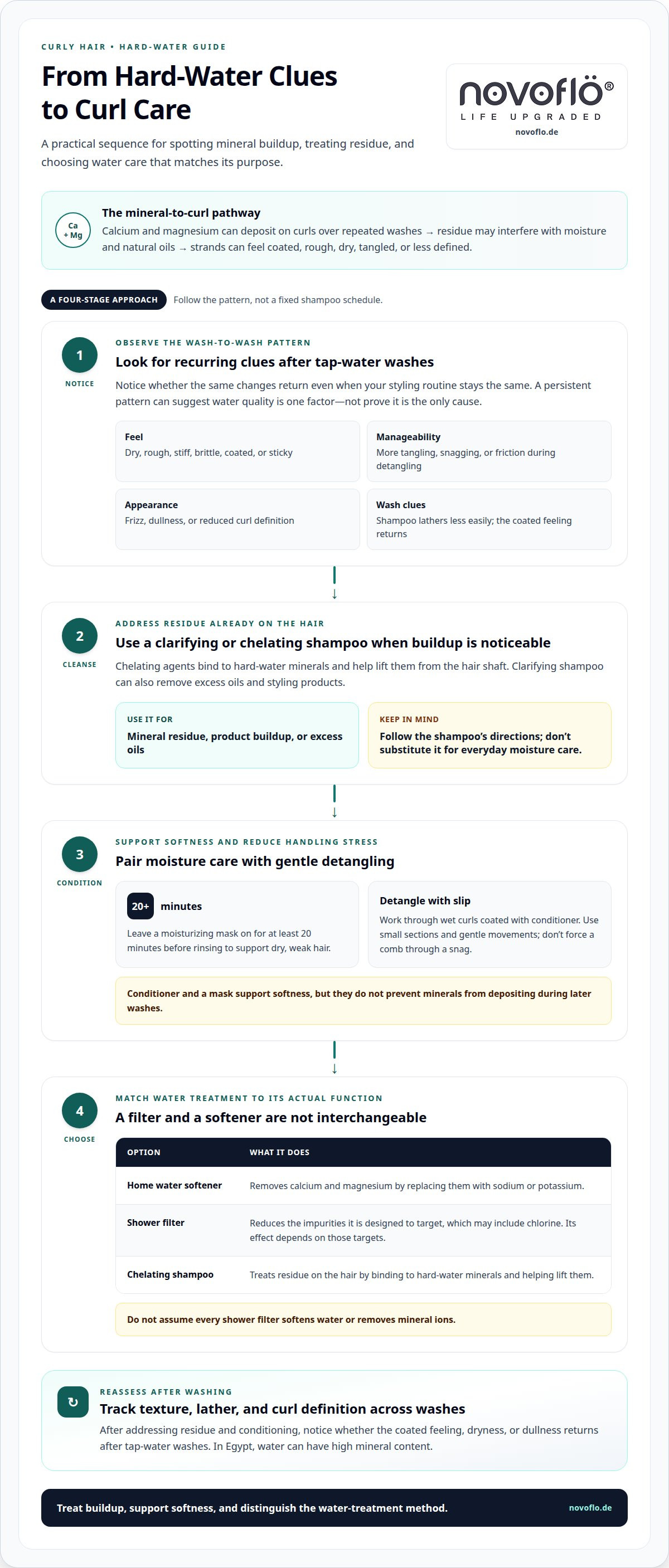
How often should curly hair use a chelating or clarifying shampoo? Use one when you notice mineral residue, and follow the shampoo’s directions rather than sticking to a fixed schedule. Chelating agents bind to hard-water minerals and help lift them from the hair shaft. Clarifying shampoo can also remove excess oils and styling products, so use it to address buildup, not as a substitute for everyday moisture care. A moisturizing mask may soften dry curls, but it won’t prevent minerals from depositing during later washes.
Hard water-related dryness, frizz, and tangling
Hard-water deposits can leave curly hair feeling dry, rough, and harder to manage after washing. Look for a pattern: note whether frizz and tangling return after tap-water washes, even when your styling routine stays the same.
Dryness, Brittleness, and Frizz
Hard water can contribute to dryness and brittleness when mineral deposits build up on hair and interfere with moisture retention. Curls may then feel stiff, look dull, and lose definition instead of staying flexible. That change affects texture, not just appearance: brittle strands can be more vulnerable to friction during washing, drying, and styling. A moisturizing mask can support dry, weak hair. Leave it on for at least 20 minutes before rinsing, but remember that a mask won’t prevent further hard-water buildup.
Tangles from Hard Water
Hard-water residue can roughen strands, making curls catch on one another and tangle more easily. Knots can make detangling a source of friction and breakage, especially if you pull through dry hair. Detangle curls while they’re wet and coated with conditioner. Work gently through small sections instead of forcing a comb through a snag. This reduces styling stress as you address deposits that may contribute to rough texture.
Scalp symptoms can accompany changes in the hair. Mineral buildup may collect on the scalp and resemble dandruff, while hard water’s alkalinity can disrupt the balance of scalp oils. If dryness or irritation appears alongside a coated feeling after washing, consider buildup on both the scalp and strands rather than adding more styling product. A product-heavy refresh may leave the underlying residue untouched.
A home water softener removes calcium and magnesium by replacing them with sodium or potassium. This differs from treating hair after deposits have formed: clarifying or chelating shampoo can help lift mineral residue, while conditioner supports slip during detangling. Match your response to the symptom. Cleanse to address buildup, then condition before styling your curls.
How calcium and magnesium in hard water affect curls
Calcium and magnesium are the minerals that distinguish hard water from soft water. During repeated washes, they can accumulate on curls and change how strands feel and behave. Curly hair’s bends create places where cuticles lift slightly, making deposits easier to attach. The result can be hair that feels coated rather than clean, even after shampooing.
Mineral residue can also interfere with moisture and natural oils reaching or staying within the hair shaft. A recurring dry, brittle feel after washing, despite using conditioner, is one practical clue. Hard water can make shampoo lather less easily because minerals react with shampoo ingredients. You may use more product while the mineral film remains. Notice whether the same texture returns after tap-water washes.
Deposits can affect appearance, too. Hard-water minerals can dull natural hair and make color-treated curls fade faster or look brassy. Reduced smoothness can affect styling: curls may feel less flexible and look less defined, even when you apply your usual products. Low-porosity hair already resists moisture absorption because its cuticle lies flat, so a mineral coating may make moisture care feel less effective.
Choose a treatment based on what it is designed to do. A water softener removes calcium and magnesium from water; a filter reduces the impurities it targets, which may include chlorine. These are different functions, so don’t assume every shower filter softens water or removes mineral ions. To address residue already on your hair, a chelating shampoo can bind to hard-water minerals and help lift them. Follow its directions, then condition and assess whether your curls feel less coated at the next wash.
This distinction matters in Egypt, where water can have high mineral content. Track changes in texture, lather, and curl definition across washes. If dryness and dullness repeatedly follow tap-water washing, water quality may be contributing alongside your products and styling habits.
Tangles, breakage, and reduced curl definition
Hard-water mineral buildup can make curls less flexible, more prone to tangling, and harder to keep defined. Watch for strands that snag or lose bounce after washing.
Reduced Curl Elasticity
Reduced curl elasticity means strands become stiffer and less able to flex without damage. Mineral buildup can make curly hair less flexible, increasing the risk of breakage when you comb, style, or separate tangled sections. A curl that feels rigid rather than springy is one practical sign. Handle your hair gently and reduce friction during your routine.
Reduced Curl Definition
Reduced curl definition means losing distinct curl shapes and bounce. Hard-water residue can limit the hair’s ability to retain natural oils, leaving strands less shiny and curls less defined. Curls may look uneven or limp even when your styling routine hasn’t changed. Mineral buildup may be a factor, especially if reduced definition comes with rough texture.
Tangles form when rough, stiff strands catch against one another. On tightly curled hair, small knots can be difficult to separate and may tighten with repeated combing. Pulling through them can add friction and contribute to breakage. Work through knots gently instead of forcing a brush through snags, and avoid detangling dry curls when they’re already catching.
Breakage can leave shorter, uneven strands that disrupt your curl pattern. Split ends may also make hair look less smooth, but hard-water mineral buildup is not the only possible cause of damaged ends. Notice where breakage appears and whether it follows repeated tangling or rough handling. A healthy routine limits tension during detangling and styling while addressing residue that may make strands stiffer.
Novoflö: Novoflö shower filter
The Novoflö shower filter reduces chlorine and targeted impurities in shower water, supporting healthier skin and hair. German-engineered for domestic water conditions in Egypt, it may be a relevant step if shower water is part of your curl concerns.
Keep the distinction clear: filtration is not the same as water softening. The Novoflö filter reduces chlorine and targeted impurities; it does not remove calcium and magnesium or lift mineral deposits already on your hair. For existing residue, chelating shampoo treats the hair itself; the filter focuses on shower water.
If chlorine and targeted impurities are your concern, explore whether the Novoflö shower filter fits your routine. Visit novoflo.de to learn more.
Make your next wash a useful test
Use your next wash days to observe, rather than overhauling everything at once. Keep your curl routine steady while changing one water-related factor, then notice how your hair responds during washing, detangling, and styling. A brief record of how your hair feels and behaves can help distinguish a water-related pattern from a change in products or handling. Let those observations guide your next adjustment. The best solutions for curly hair frizz linked to hard tap water start by identifying which part of your routine needs attention.
There’s no need to blame your curls or keep layering products over a problem you haven’t identified. Choose a next step that matches what you’ve observed, and give your routine room to show whether it helps. For a conversation about your hair and shower-water concerns, contact Novoflö about your curls. Start with a clearer question, make one considered change, and build a routine that works with your curls.
Frequently Asked Questions
Are there natural remedies for hard water?
Natural hair treatments can support softness, but they don’t change the mineral content of shower water. Conditioner or a moisturizing mask may improve how curls feel after washing, while the water continues to supply minerals. Keep these roles separate: use hair care for softness and water treatment for targeted impurities. If you try a homemade rinse, choose a gentle option and stop if it irritates your scalp.
So what can you do if you live in a hard water area?
Use a chelating shampoo when residue builds up, then condition and detangle gently. Track how your hair feels after washing, including whether it seems coated or harder to manage. Change one part of your routine at a time so you can notice what helps. Solutions for curly hair frizz from hard tap water work best when they address both existing residue and recurring water exposure.
What Daily Routine and Products Would You Suggest for Keeping Curly Hair Defined and Frizz-Free?
Apply leave-on cream while curls are slightly damp so it spreads evenly. Detangle when hair is wet and coated with conditioner, then style without pulling through knots. On non-wash days, serum can refresh curls and help control frizz. If a coated feeling returns, use clarifying shampoo as directed rather than layering more styling product over residue.
Which Products are Best for Curls Damaged by Hard Water?
Choose products by purpose: chelating shampoo to bind and lift mineral residue, conditioner to add slip during detangling, and a moisturizing mask to support dry-feeling hair. A mask won’t prevent new deposits. If curls feel coated after washing, address residue before adding more cream or gel. Follow product directions and handle wet strands gently to limit friction during care and styling.
How does hard tap water cause frizz and buildup in curly hair?
Hard tap water contains calcium and magnesium that can accumulate on hair over repeated washes. Curly strands have bends where deposits can attach, and residue may leave hair rougher and less able to retain moisture. You may notice a coated feel or less smooth styling, even if your products haven’t changed. Hard water can also make shampoo lather less easily.
Does a shower water softener or filter help curly hair with hard water?
A water softener and a shower filter do different jobs. A softener removes calcium and magnesium, while the Novoflö shower filter reduces chlorine and targeted impurities to support healthier skin and hair. Solutions for curly hair frizz from hard tap water depend on matching treatment to the concern: filtration isn’t the same as softening. For residue already on curls, use hair cleansing rather than relying on a filter.


