


Compare Shower Filter Options for Your Water and Rental Needs
The most feature-packed shower filter may be the wrong one for your water. To decide how to choose a shower filter, match its filtration media to the impurity you want to reduce, then consider water temperature, flow and cartridge life. If you rent, most shower filters are designed for do-it-yourself installation with minimal tools, making a removable option practical for many apartments.
It’s easy to focus on claims about softer water or smoother hair. But shower filters don’t effectively remove the calcium and magnesium minerals that cause water hardness, so the right choice depends on what the filter can actually address. Chlorine reduction, mineral hardness and cartridge replacement are different considerations, not interchangeable promises.
This guide compares common filter technologies, explains when to replace a cartridge and walks through rental-friendly installation considerations. You’ll also get a straightforward checklist for weighing filtration claims, water pressure and maintenance, so you can choose based on your needs rather than marketing alone.
Key Takeaways
- Match filter media to the issue you want to address, and don’t confuse chlorine reduction with water softening.
- Factor cartridge lifespan and replacement frequency into your choice, not just the filter’s initial setup.
- For a rental, look for a shower filter designed for straightforward DIY installation and plan to keep the original fitting intact.
- Compare filtration claims, flow rate, water-pressure compatibility and maintenance needs before choosing an option for your shower.
KDF, carbon, vitamin C and water-softening filter technologies
In Egypt, use your local water provider’s quality report or a home water test kit to identify chlorine, hard minerals and other contaminants. For safe use, follow the manufacturer’s instructions and don’t assume a shower filter addresses every impurity.
KDF Filter Technology
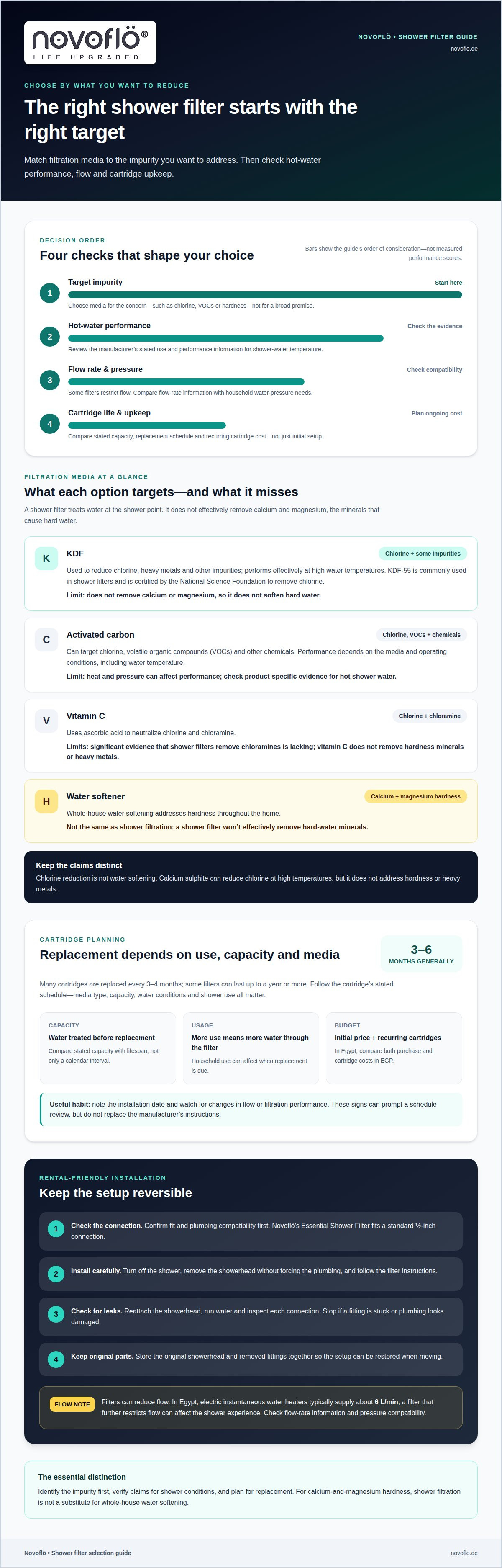
KDF media is used to reduce chlorine, heavy metals and other impurities, and it performs effectively at high water temperatures. KDF-55 is commonly used in shower filters; the National Science Foundation certifies it to remove chlorine from water. It doesn’t remove calcium and magnesium, so it won’t soften hard water. Check the fitting and stated plumbing compatibility for your shower.
Carbon Filter Technology
Activated carbon is used to target chlorine, volatile organic compounds (VOCs) and other chemicals. Performance can depend on the media and operating conditions, including water temperature. Review the manufacturer’s stated use and supporting performance information for hot shower water; the media name alone does not establish what the filter reduces.
Vitamin C Filter Technology
Vitamin C media uses ascorbic acid to neutralize chlorine and chloramine, although significant evidence that shower filters remove chloramines is lacking. Vitamin C does not remove hard-water minerals or heavy metals. Calcium sulphite can reduce chlorine at high temperatures, but it also does not address hardness or heavy metals.
| Option | Primary target | Key limitation |
|---|---|---|
| KDF | Chlorine and some impurities | Doesn’t remove hardness minerals |
| Carbon | Chlorine, VOCs and chemicals | Heat and pressure can limit performance |
| Vitamin C | Chlorine and chloramine | Doesn’t soften water |
| Water softener | Calcium and magnesium hardness | Whole-house treatment, not shower filtration |
Hard water contains calcium and magnesium, and a shower filter won’t effectively remove these minerals. A shower filter treats water at the shower, while whole-house water softening addresses hardness throughout the home. Match the product’s stated purpose to your concern, then assess its performance claims, temperature suitability and plumbing fit.
How Often Should I Replace The Filter?
Plan cartridge changes around the filter’s stated lifespan, household use and water conditions. Replacement timing affects filtration performance and the ongoing cost of maintaining a shower filter.
In Egypt, compare the filter’s purchase price in EGP with the recurring cartridge cost, also in EGP. The total depends on the filter type, cartridge capacity and how often the shower is used.
Filter Cartridge Lifespan
Shower filters generally need replacement every 3 to 6 months, depending on filter type and usage. Most cartridges are replaced every 3-4 months, with water use influencing the interval. Some filters can last up to a year or more before replacement. Follow the cartridge’s stated schedule rather than assuming every media type lasts equally long.
Different filtration materials have different capacities and replacement schedules. A cartridge designed to reduce chlorine may have a different lifespan from one using another combination of media. Hard-water minerals such as calcium and magnesium are not effectively removed by shower filters, and their presence alone does not determine cartridge life.
Filter Capacity and Replacement Frequency
Capacity describes how much water a cartridge is designed to treat before replacement. Higher shower use means more water passes through the filter, so usage can affect when replacement is due. Compare stated capacity with lifespan rather than relying on a calendar interval alone.
Track the installation date and note changes in water flow or filtration performance. Those signs can help you review whether the cartridge needs attention, but they don’t replace the manufacturer’s schedule. Compounds such as chlorine and heavy metals also differ, so a cartridge’s target contaminants matter when comparing capacity claims.
For a realistic EGP budget, add the initial filter price to the recurring cartridge cost over its replacement cycle. Frequent cartridge changes can raise ongoing expenses, so compare upkeep alongside filtration claims. Choose a schedule that fits your routine, and review shower filtration details when comparing cartridge maintenance.
Can I install a shower filter in a rented apartment?
Usually, yes. Most shower filters are designed for do-it-yourself installation with minimal tools, making them a practical option for renters.
A shower filter fits at the shower connection, where water passes through its filtration media before reaching the showerhead. Novoflö’s Essential Shower Filter fits a standard ½-inch connection. Before installation, check the fit and follow the instructions. Keep the original showerhead and any removed fittings together so you can restore the setup when you move.
Use a careful, reversible approach. Turn off the shower, remove the showerhead without forcing the plumbing, and install the filter according to its instructions. Reattach the showerhead, then run water and inspect each connection for leaks. If a fitting is stuck or the plumbing appears damaged, stop rather than risk harming the rental’s fixture.
Water pressure can change after installation because some filters restrict flow. Check the filter’s flow-rate information and compatibility with household water pressure before choosing. In Egypt, homes with electric instantaneous water heaters may also need to consider flow: these heaters typically supply about 6 L/min. A filter that further reduces flow can affect the shower experience.
A shower filter treats water at one shower point. It isn’t a water softener and won’t effectively remove the calcium and magnesium minerals responsible for hard water throughout a home. If your concern is hardness at multiple taps, a shower attachment won’t provide whole-house treatment.
After installation, note the cartridge’s installation date and replace it according to the stated schedule. Check for leaks after changing a cartridge and make sure the showerhead remains firmly connected. Novoflö’s filter installs without tools, so routine upkeep does not require plumbing alterations.
Checklist for choosing a shower filter
Use this checklist to decide how to choose a shower filter for your water concern. Start with the impurity you want to reduce, then compare the filter’s stated purpose, performance information and practical fit.
General Filter Selection Checklist
A consistent comparison helps separate useful product details from broad marketing claims. As you decide how to choose a shower filter, assess each model against the same criteria:
- Match its filtration media to a specific contaminant, such as chlorine or certain metals.
- Review the manufacturer’s specifications and look for NSF/ANSI 177, the consensus standard for aesthetic chlorine reduction.
- Compare stated flow rate with household water pressure, since some filters can reduce pressure.
- Check cartridge lifespan, replacement frequency and plumbing compatibility.
- Treat claims of 99% chlorine removal cautiously, and look for performance evidence.
Choosing by Local Water Quality
Start by identifying the impurity you want to address, then choose a filter designed to reduce it. Novoflö’s Essential Shower Filter is designed for domestic water conditions in Egypt and reduces chlorine and targeted impurities. When deciding how to choose a shower filter, focus on the product’s stated purpose and performance rather than the length of its contaminant list.
Separate chlorine from hardness. Calcium and magnesium cause hard water, but shower filters don’t effectively remove these minerals. A chlorine-focused cartridge won’t solve a calcium concern. Also compare the manufacturer’s claims with the filter’s stated operating temperature, since performance can depend on both the media and use conditions.
Before deciding, name your target contaminant, review the manufacturer’s evidence, then assess pressure, cartridge upkeep and fit. A clear match between your water concern and a filter’s documented purpose is more useful than a broad promise. Explore shower filtration options after you’ve identified what matters in your water.
Novoflö: Novoflö shower filter
Novoflö’s Essential Shower Filter is designed to reduce chlorine and targeted impurities in shower water. German-engineered for domestic water conditions in Egypt, it supports your shower routine as a practical step toward healthier skin and hair.
Choose it for personal shower filtration, not as a fix for every water issue. A shower filter does not replace whole-house treatment or a water softener for calcium and magnesium hardness. Match your concern to the filter’s purpose and follow the cartridge replacement schedule.
If chlorine reduction fits your goal, visit novoflo.de to explore the Novoflö shower filter.
Make Your Next Shower Choice Deliberate
Your shower routine brings you into daily contact with water. Make the choice intentional: define what you want to address, then choose a filter whose stated purpose fits that goal. Knowing how to choose a shower filter means looking beyond appearance and focusing on a practical fit for your home and routine.
Keep your priorities simple. A clear goal makes product information easier to assess and helps you avoid expecting one shower filter to solve every water concern. Choose a filter for what it is designed to reduce, and make cartridge replacement part of your routine.
Novoflö offers a shower filter for people seeking a personal filtration option. Explore the Novoflö shower filter and take the next step toward a more considered shower routine.
Frequently Asked Questions
Do Shower Head Filters Work?
Yes, showerhead filters can reduce specific contaminants when their media is designed to target them. Novoflö’s Essential Shower Filter uses multi-layer filtration to reduce chlorine and targeted impurities, including heavy metals, VOCs, micro-plastics, bacteria, rust and sediment. It does not remove every contaminant or soften hard water. Match the product’s stated purpose to your concern rather than relying on broad claims.
Guide: When is a shower filter necessary?
A shower filter may suit you when a specific water concern, such as chlorine exposure during hot showers, drives your decision. It isn’t a universal requirement or a replacement for treatment aimed at whole-home hardness. Start with a water quality report or home test kit, identify the contaminant, then decide whether a shower-point filter addresses it. If not, this product category may not fit the problem.
How often do I need to replace the cartridge?
Replace a cartridge according to its manufacturer’s schedule and the amount of water it treats. Most shower filter cartridges need replacement every 3-4 months, while general guidance ranges from 3 to 6 months depending on filter type and use. Some models may last a year or more. For example, frequent showers can use up a cartridge’s capacity sooner than occasional use.
Is a vitamin C filter better than a carbon filter?
Neither is automatically better; they target different concerns. Vitamin C media uses ascorbic acid to neutralize chlorine and chloramine, while activated carbon can target chlorine, VOCs and other chemicals. However, significant evidence that shower filters remove chloramines is lacking. Compare the specific media, operating conditions and performance information before deciding.
What contaminants can shower filters remove from water?
What a shower filter reduces depends on its filtration media. Novoflö’s Essential Shower Filter is designed to reduce chlorine and targeted impurities, including heavy metals, VOCs, micro-plastics, bacteria, rust and sediment. It does not remove everything. Check that the product identifies the specific substances it targets and provides performance information relevant to shower use.
Do shower filters remove chlorine, chloramine, or hard-water minerals?
Some shower filters, particularly those using KDF media, can remove chlorine. Vitamin C media can neutralize chlorine and chloramine, but significant evidence that shower filters remove chloramines is lacking. Shower filters don’t effectively remove calcium and magnesium, the minerals responsible for hard water. Choose based on the contaminant you want to address, and don’t treat chlorine reduction as water softening.


